
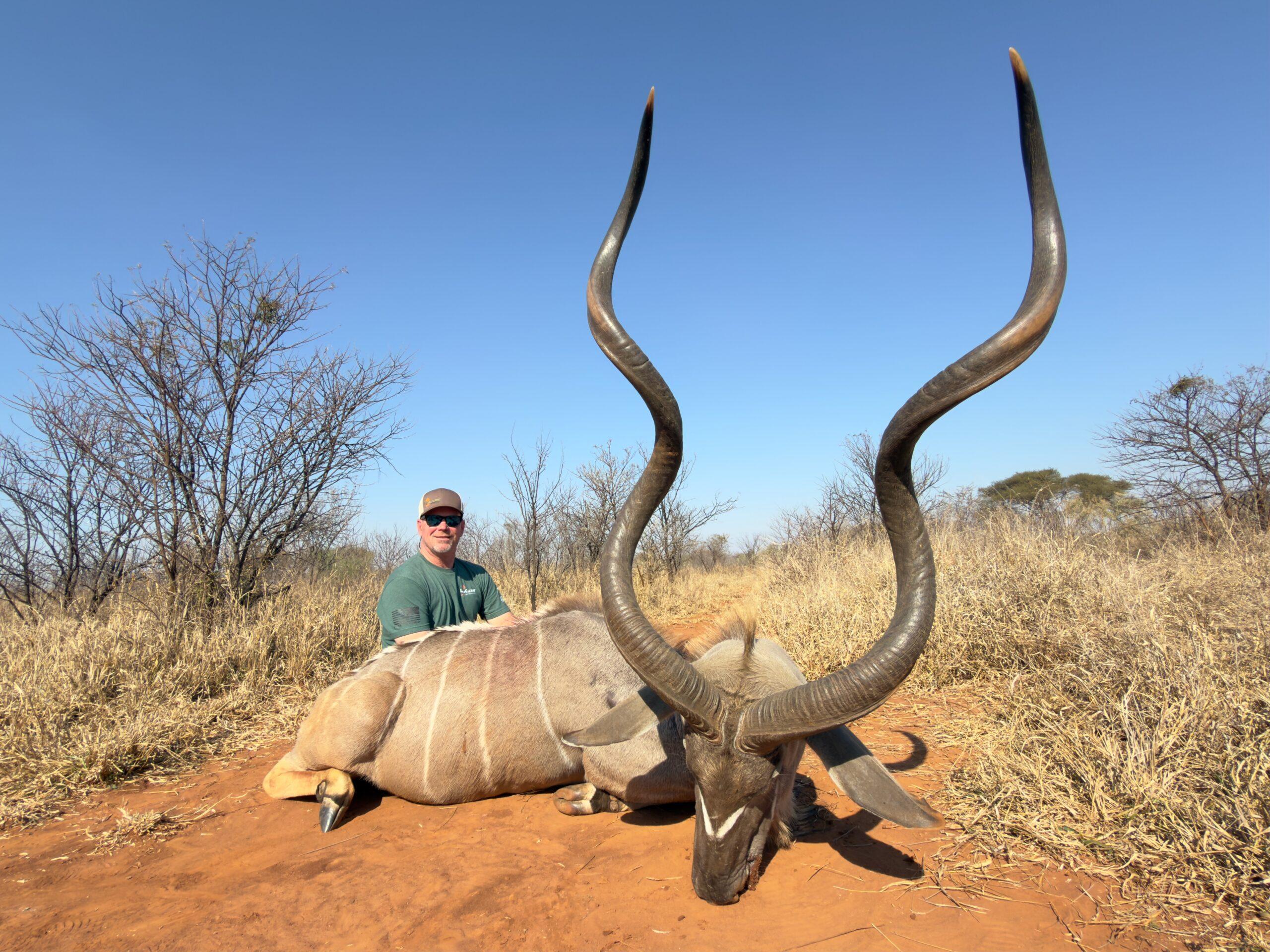
Expect 8 to 12 months from the end of your hunt until your trophies reach your taxidermist in the USA. The time goes into four stages: dip-and-pack preparation in Africa, export permits and shipping, U.S. import clearance through a customs broker, and delivery to your approved taxidermist. Most delays come from missing paperwork, not slow shipping.
At Global Hunting Solutions (GHS) and 4 Aces Outfitters, the first half of that chain never leaves our hands. We run a licensed dip-and-pack facility on our own premises in South Africa, and we handle every export permit and document ourselves. After more than 30 years of moving trophies from Africa to American hunters, this is the process we follow for every client.
The Trophy Shipping Timeline at a Glance
| Stage | Who handles it | What happens |
|---|---|---|
| 1. Dip-and-pack | GHS / 4 Aces, on premises | Trophies are cleaned, treated and prepared for export |
| 2. Export permits and documents | GHS / 4 Aces | All export permits and paperwork are prepared |
| 3. Crating and shipping | Our shipping agent | Documents double-checked; crates built, weighed, measured and priced; shipment sent |
| 4. U.S. import and clearance | Your U.S. customs broker | Import paperwork and permits filed; shipment cleared with U.S. Fish and Wildlife Service (USFWS) at your port of entry |
| 5. Delivery | Your customs broker | Cleared trophies shipped to your approved taxidermist |
| Total | 8 to 12 months |
Step 1: Dip-and-Pack at Our Licensed Facility
Dip-and-pack is the preparation every African trophy needs before it can leave the country. Skins, skulls and horns are cleaned, treated and packed to the standard that export and import inspectors expect.
Many outfitters send this work to an outside dip-and-pack company and wait on their schedule. GHS operates its own licensed dip-and-pack facility on premises. Your trophies go from the skinning shed to preparation without changing hands, which means fewer chances for mix-ups and no waiting in another company’s queue.
Step 2: Export Permits and Documents, Handled by Us
Every trophy that leaves Africa needs export paperwork. Species listed under CITES, such as leopard and elephant, need additional permits, and some also need a U.S. import permit before they can enter the country.
GHS handles all export permits and documents for you. We know which species on your hunt need extra paperwork, so we can raise it before you pull the trigger rather than after the hunt. If you are planning a hunt that includes a CITES-listed species, ask us early; the permit question affects your timeline more than anything else.
Step 3: Crating and Shipping
Once the trophies are prepared and the paperwork is complete, our shipping agent takes over. The agent:
- Arranges the shipment and double-checks every document against the trophies being shipped
- Builds the crates for your trophies
- Weighs and measures each crate
- Calculates the shipping price by dimensional weight
Dimensional weight means you pay for the space a crate takes up, not just how heavy it is. A crate holding a large set of kudu horns is light but bulky, so its size often sets the price. That is why a few big-horned trophies can cost more to ship than a heavier load of skins.
Then your trophies are shipped to the United States.
Step 4: Hire a U.S. Customs Broker for Import
We strongly recommend hiring a U.S. customs broker who specializes in wildlife imports. Your broker handles the import side so you don’t have to:
- Files all import paperwork and required permits
- Tracks the shipment to your selected port of entry
- Works with USFWS and the shipping agent to clear your trophies
Your shipment arrives at the port of entry you selected. Nothing moves until USFWS approves the paperwork, and a missing or mismatched document is the most common reason trophies sit in a warehouse. Having our documents double-checked on the African side and a broker checking on the U.S. side is what keeps your shipment moving.
Step 5: Delivery to Your Approved Taxidermist
After all paperwork is approved, your broker ships the trophies to your approved taxidermist. Choose your taxidermist before you travel, and confirm they are approved to receive imported trophies, so your broker has a delivery address ready the day your shipment clears.
How to Keep Your Trophies on Schedule
- Choose your customs broker and taxidermist before the hunt. Give both names to us at camp.
- Tell us your preferred port of entry. Pick one close to your taxidermist where possible.
- Answer document requests quickly. A signature or copy that takes two weeks to return adds two weeks to your wait.
- Raise CITES species early. If leopard, elephant or another listed species is on your list, plan the permits before the hunt.
- Budget for shipping by size, not weight. Big horns and full-body mounts take up more crate space.
Why Owner-Run Trophy Handling Matters
When an outfitter, a separate dip-and-pack company and a separate permit service all touch your trophies, nobody owns the whole result. At GHS, the people who guided your hunt also prepare your trophies and handle your export documents. If a question comes up months later, you call the same team, starting with Travis Wier directly. Read more about booking through an agent or an outfitter, what’s included in a South African hunting package, and the South African hunting permit rules.
Frequently Asked Questions
How long does it take to get hunting trophies home from Africa?
Expect 8 to 12 months from the end of your hunt until your trophies reach your taxidermist in the USA. Most of that time goes into preparation, export permits, shipping and U.S. import clearance.
Do I need a customs broker to import my trophies into the US?
Global Hunting Solutions recommends hiring a U.S. customs broker who handles wildlife imports. The broker files the import paperwork and permits, and works with USFWS to clear your trophies at the port of entry.
How is the cost of shipping trophies from Africa calculated?
Shipping is priced by dimensional weight, which is based on the size of each crate as well as its weight. Large horns and full-body mounts take up more space, so they usually cost more to ship than smaller, heavier items.
Planning a hunt and want your trophies handled by the same team from field to crate? Contact Global Hunting Solutions or call Travis Wier directly at 214-707-5833.