
Africa & Spain Hunting Questions Answered
Answers from Global Hunting Solutions and 4 Aces Outfitters. Travis Wier, Adam Barnard, Jose Aranda and their teams plan guided hunts in Africa and Spain. This page answers the African hunting safari questions and Spain hunting questions we hear most often, and connects them to our destination guides, published prices, and videos. For an exact itinerary and quote, contact the owners.
Common African Hunting Safari Questions
How much does an African hunting safari cost?
The total depends on the country, number of days, guiding arrangement, species, trophy fees, permits and travel. Our 2027 South Africa cost guide lists a 1 hunter to 1 professional hunter daily rate of $550, $400 per hunter per day for two hunters sharing one professional hunter, and $250 per day for a non-hunting observer. Rifle hire is $100 per day in South Africa, ammunition included, and $75 per day in Spain. Its listed daily rate includes accommodation, meals, local beverages, laundry, field preparation and Kimberley Airport transfers. Trophy fees, 15% VAT, gratuities and applicable permits are separate. Package and destination prices vary; confirm availability and a written total before booking. Start here: South Africa hunting safaris and the full cost and inclusions guide.What costs should I ask about beyond an advertised safari price?
A daily rate and trophy fees do not always show the total cost of a trip. Travis Wier advises asking for a written budget before you travel. Check what the daily rate includes, then itemize permits, applicable tax, gratuities, rifle hire, trophy preparation, taxidermy, freight, import handling and travel where relevant. Our 2027 South Africa cost guide identifies the listed inclusions and separate charges; request a quote for your own species and itinerary. Watch Travis discuss the costs beyond the advertised safari price. Watch the fuller safari-cost breakdown.Is South Africa a good first African safari?
Travis Wier recommends South Africa as a practical first safari because the travel is straightforward, English is widely spoken, lodge-based trips are comfortable, and hunters can pursue several plains-game species on one itinerary. Our Northern Cape operation near Kimberley offers kudu, nyala, impala, wildebeest and other species. Malaria-free options depend on the hunting area, so ask us about your exact route. Our team helps coordinate the hunting plan, licenses and rifle paperwork. Tell us your target animals, available days, walking ability and whether a companion is joining; we can then explain the area, hunting method and realistic budget. Watch Travis’s short video: Your First Safari: Why Hunting South Africa Is Easier Than You Think.What should U.S. hunters check before traveling to South Africa?
Confirm the current passport, entry, health and transit requirements for every traveler on your route, including any rules for children. If bringing a firearm, ask about airline, transit and South African documentation well before departure. Entry rules can change; check official government and airline guidance for your dates, then coordinate the hunt-specific paperwork with the GHS team. Watch Travis discuss how straightforward the trip can be for U.S. travelers.How should I plan my flight to a South African safari?
Start with the hunting area and arrival airport, then allow time for connections, luggage and any firearm paperwork. Ask the outfitting team how the airport transfer is arranged. Travis notes that the long travel day can be easier with advance planning and a comfort upgrade that fits your budget. Routes and airline services change, so confirm your specific flights before booking. Watch Travis on making the flight to Africa easier.When is the best time to hunt South Africa?
There is no single best month for every hunter. Weather, hunting area, target species and whether your family is joining all affect the trip. South Africa is not always hot and dry; ask Travis and Adam what conditions to expect at Kimberley or Limpopo on your proposed dates. They can match your safari schedule to the hunting plan and the experience you want. Watch Travis explain why safari timing matters.Should my first African safari focus on plains game or dangerous game?
For many first-time clients, a plains-game hunt is a way to learn the pace of a safari while pursuing species such as kudu, impala or wildebeest. A Cape buffalo or other dangerous-game hunt calls for a different plan, guiding team, preparation, permissions and budget. Tell Travis Wier and Adam Barnard which experience matters most to you. They can explain the hunting area, method, species list and costs in a written proposal rather than assuming one safari format fits every hunter. Listen to Travis explain plains game versus dangerous game, or explore South Africa hunts.What is a Cape buffalo hunt actually like?
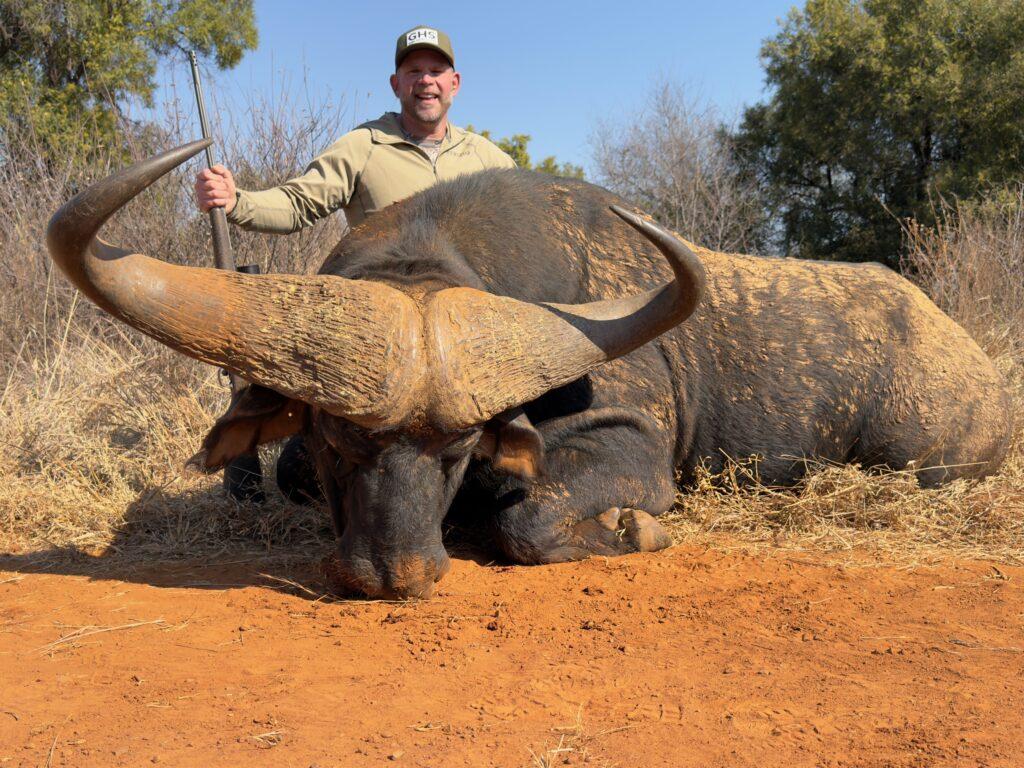
What happens on a Botswana elephant hunt?
Travis’s Botswana field video follows professional hunter Geoffrey Wayland tracking a mature bull on foot, reading the wind and making a careful close approach. Ask the team about the specific concession, available dates, guiding arrangements, permits and total cost for a proposed hunt. Conditions and encounters vary, and no particular shot distance or result can be promised. Explore the Botswana program. Watch the Botswana elephant hunt with Geoffrey Wayland.How does the team handle a wounded animal?
A hunter and outfitter are responsible for making every reasonable effort to recover wounded game. Travis describes continuing the track and bringing in dogs when needed. The professional hunter directs the follow-up according to the conditions and local requirements. Ask about this policy before the hunt, including how recovery affects the day’s schedule and any applicable trophy-fee terms. Watch Travis discuss responsibility after a shot.Who will plan and guide my hunt?
Global Hunting Solutions works with the 4 Aces outfitting teams in Africa and Spain. Founder Travis Wier and fellow owners Adam Barnard and Jose Aranda are introduced on our About page. You deal directly with the people responsible for your expedition, and the professional hunter and guide for your specific itinerary should be clear in your written proposal. Watch: Outfitter vs. Broker: Who Are You Really Booking Your Hunt With? Watch Travis on booking directly with the outfitter.What does a professional hunter do on an African safari?
The professional hunter, or PH, is your field guide and a central part of your safari. The right PH helps plan the day, coordinate trackers, assess game and conditions, and make safe decisions in the field. Before booking, ask who your PH will be, how much time you will hunt together, and who manages the rest of the team. Watch Travis explain why the PH matters.What should I ask before sending a deposit?
Ask for the hunting area, dates, number of hunting days, who guides, the intended species and trophy class, what happens if a species is not taken, and a written list of included and excluded costs. Clarify permits, transfers, rifle arrangements, tax, gratuities, trophy preparation and shipping, and cancellation terms before payment. For Spain, also confirm travel between ibex areas. Watch: What Every Hunter Should Ask Before Sending a Deposit.Is a private ranch the same as a hunting concession?
The words on a brochure do not tell you exactly where or how you will hunt. Travis asks clients to distinguish a private ranch from a concession before paying a deposit. Request the hunting area and its boundaries, access arrangements, method, species and who operates it. Ask whether your itinerary uses more than one area and get those details in writing. Watch Travis on the ranch-versus-concession question.Who should I plan to tip on an African safari?
A safari often involves a professional hunter, trackers, skinners, cooks and lodge staff. Travis recommends discussing gratuities before departure so you know which roles are involved and how your outfitter handles tips. Gratuities are separate from the published South Africa daily rate; ask for guidance in your written trip budget rather than guessing at the end. Watch Travis explain safari gratuities.What is dip-and-pack, and how do trophies get home?
After the hunt, skins and trophies must be cleaned, treated, dried and packed for the next stage of export. Travis describes the steps from field preparation through dip-and-pack, documentation and shipping. The GHS team says it handles preparation in-house; ask for the written scope, separate charges, export timeline, importer or taxidermist arrangements and any species-specific permits. Shipping and final delivery depend on third parties and government processes. Watch Travis explain the dip-and-pack chain.Should I have my trophies mounted in Africa or at home?
Both are options to discuss before the hunt. Travis notes that African taxidermy quality has changed over time, but the final choice is personal. Compare recent work, written prices, dip-and-pack or mounting arrangements, shipping, import requirements and the total landed cost. Ask who will handle each step and what happens if there is a delay; trophy processing and shipping involve separate providers. Watch Travis discuss African taxidermy.Why do hunters choose sable on an African safari?
Sable is a distinctive plains-game species with long, sweeping horns and a strong presence in the field. If it is a priority, tell the team before building your itinerary so the hunting area, time, trophy expectations and fee are clear in your written proposal. Availability and opportunities vary by area and season. Watch the GHS sable reel.Can a spouse or non-hunting guest enjoy the trip?
Yes. The South Africa guide describes lodge amenities and options such as wildlife viewing, spa time and sightseeing. Our Spain ibex page describes cultural tours, cuisine and time for a companion while the hunter is in the mountains. For 2027, the South Africa non-hunting observer rate is $250 per day, and the Spain non-hunting observer rate is $550 per day. Tell us what both guests want from the trip so the itinerary and written quote account for them. See the GHS Facebook reel about planning an African safari your wife can enjoy, Travis’s Instagram reel on making the trip enjoyable for a spouse, and his reel on an African safari as a family trip.What is the Spanish Ibex Grand Slam?
It is the pursuit of the Gredos, Beceite, Southeastern and Ronda ibex in Spain. A single-area hunt and a four-area Grand Slam require different schedules and travel across Spain. Each mountain area has its own terrain and physical demands; discuss your walking ability, season, optics and gear with the team before choosing dates. Jose Aranda and the 4 Aces Spain team can build the itinerary around your target ibex, dates, pace and guest interests. Ask for a quote that separates guiding, trophy class, permits, transfers and accommodation. Explore Spain ibex hunts and watch The Ibex Grand Slam Explained: Four Rams, Four Mountains. See Travis’s Grand Slam overview and his four-mountain explanation.What else can I hunt in Spain besides ibex?
Spain can offer red stag, chamois, mouflon and other species alongside its four ibex areas. The right combination depends on dates, regions, permits and travel time. Tell Jose Aranda which animals matter most and ask for a day-by-day proposal that shows where you hunt and what each species costs. The itinerary can also leave time for food, scenery and non-hunting guests. Watch Travis on Spain’s range of hunting species and his reel on Spain beyond ibex.What is a Spanish ibex hunting day like?
Travis describes glassing steep country at daylight, climbing in mountain terrain, then returning to a real dinner and bed at night. The hunt is part of a broader Spain trip with food, scenery and culture. Jose Aranda and the 4 Aces Spain team can plan an itinerary around one ibex area or all four, with the walking demands and travel between areas made clear before you book. Watch Travis describe the Spain ibex experience. Watch why knowing the terrain and local team matters.Where can I watch more GHS answers?
Our short Q&A videos and field updates are on Facebook, Instagram, TikTok and YouTube. Video posts can be brief; use the written destination and cost pages for details and request a current quote for your own hunt. Ready to plan? Tell Travis and the team your destination, species, dates and number of guests.Listen to the GHS Hunting Podcast
Hear Travis Wier discuss safari planning, choosing an outfitter, South Africa hunting and the Spanish Ibex Grand Slam. Browse the released podcast episodes and planning guides.