
Introduction
Few African plains game trophies are as respected as the kudu. Known as the Grey Ghost, this spiral-horned antelope has earned its nickname through its remarkable ability to disappear into the bushveld, often leaving hunters wondering how such a large animal could vanish so completely. For many hunters planning a hunting safari in South Africa, kudu hunting represents the perfect combination of challenge, skill, and the opportunity to pursue one of Africa’s most iconic plains game species.
Whether you’re planning your first South African safari or returning to Africa in search of a mature spiral-horned bull, preparation makes a difference. This guide covers what to look for in a trophy kudu, the best times to hunt, proven hunting methods, recommended calibers, and what you can expect when hunting with Global Hunting Solutions in Limpopo and the Free State.
Founded by Travis Wier and backed by over 30 years of global hunting experience, Global Hunting Solutions and 4 Aces Safari Outfitters give hunters direct access to professional hunters, owner-operated planning with no third parties, and luxury service from arrival to departure.
Why Kudu Is Called the Grey Ghost
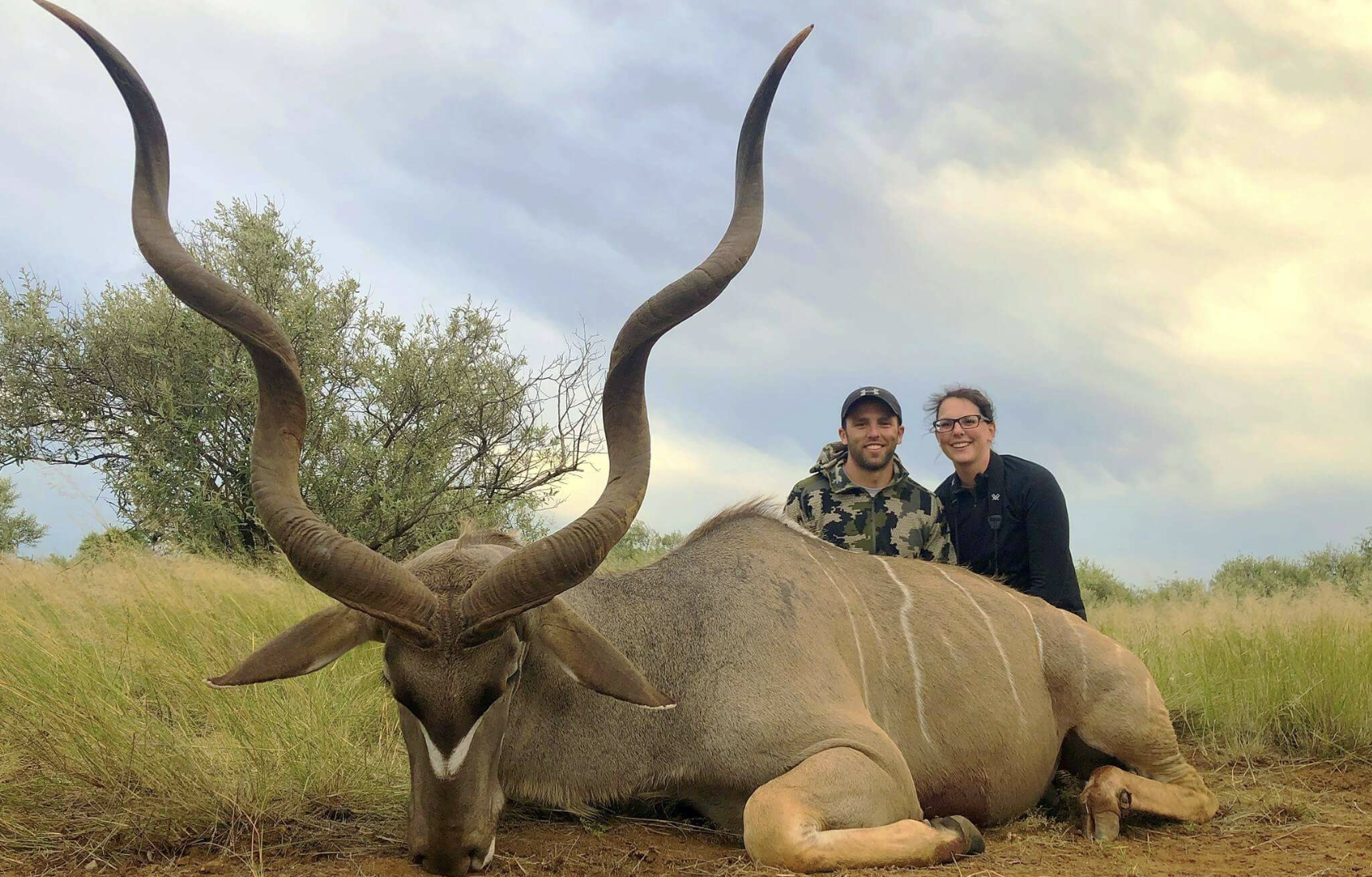
The nickname “Grey Ghost” is more than hunting folklore. It accurately describes the kudu’s uncanny ability to blend into its surroundings and disappear before a hunter realizes it was ever there. Even experienced hunters are often surprised when a mature bull steps from thick cover only to melt back into the bushveld moments later.
The greater kudu is one of Africa’s largest antelope species. Mature bulls stand around 5 feet (1.5 meters) at the shoulder and can weigh 500 to 700 pounds (225 to 320 kilograms). Their grey-brown coats are marked with narrow white vertical stripes that break up their outline in the thornveld and bushveld, while their long spiral horns, often completing two and a half twists, make them one of the continent’s most recognizable game animals.
Despite their size, kudu rely on camouflage more than speed. Their coloring mirrors the dry grasses, acacia trees, and scattered shadows of the South African bushveld so effectively that a bull can remain almost invisible while standing completely still. It’s common for hunters to scan a hillside several times before realizing a kudu has been watching them all along.
Their senses add another layer of difficulty. Kudu have exceptional hearing that picks up the smallest unnatural sound, an acute sense of smell that quickly detects shifting wind, and sharp eyesight that notices even slight movement. A careless step on dry leaves or a sudden change in the breeze is often enough to send a bull slipping silently into cover.
One of the kudu’s most fascinating behaviors is its instinct to freeze rather than flee. Instead of immediately running, a mature bull often remains motionless, trusting its camouflage to keep it hidden. Only when it believes the danger is too close will it bound away with surprising speed, clearing thick brush and obstacles with long, effortless strides.
This combination of camouflage, awareness, and cautious behavior is what makes kudu hunting so rewarding. Every successful stalk demands patience, careful movement, and the ability to read both the terrain and the animal. It’s a challenge that continues to draw hunters back to South Africa year after year.
At Global Hunting Solutions, hunts take place in carefully managed areas of Limpopo and the Free State, where experienced professional hunters (PHs) and trackers use their local knowledge to locate mature bulls while maintaining ethical hunting practices and responsible wildlife management.
Trophy Quality: What to Look For in a Kudu Bull
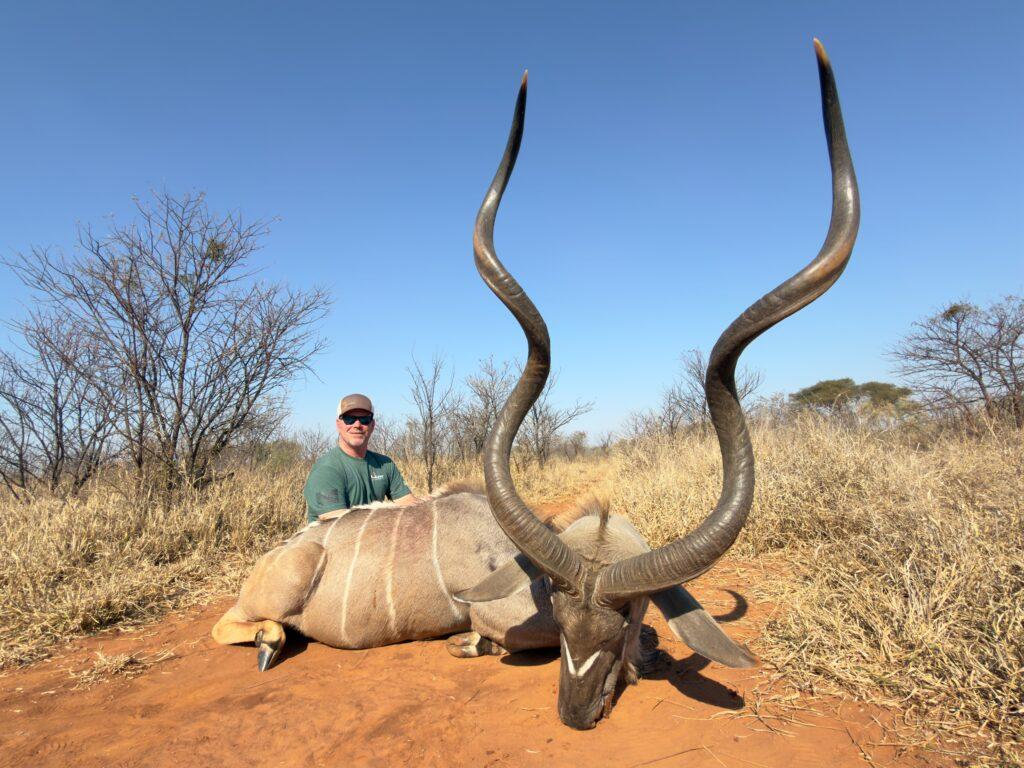
Judging a kudu bull is one of the most rewarding and demanding aspects of the hunt. While horn length is often the first feature hunters notice, experienced professional hunters (PHs) evaluate several characteristics before identifying a truly mature trophy bull.
For a greater kudu, a bull with horns measuring 50 inches or more is generally considered a trophy-class animal. Bulls from the Eastern Cape commonly average 43 to 47 inches, while well-managed hunting areas in Limpopo and the Free State can produce older bulls with stronger horn potential.
Length alone doesn’t tell the whole story. A quality trophy also displays balanced horn symmetry, deep curls, heavy bases, and clean white tips. Some bulls appear shorter than they really are because much of their horn length is hidden within the depth of the spirals. Learning to judge these hidden curves is one of the skills that develops with experience in the field.
Hunters interested in record-book trophies often refer to the Safari Club International (SCI) scoring system. For greater kudu, SCI scoring combines the length of both horns with their base circumferences, with a minimum score of 121 required for entry. While SCI scores provide a useful benchmark, many hunters place greater value on taking an old, mature bull in a fair-chase setting.
Age is another important consideration. Mature bulls typically have heavier bodies, thicker necks, and distinctive grey coloring around the face that becomes more pronounced over time. Their movements are often slower and more deliberate than those of younger animals, reflecting years of experience surviving predators, drought, and hunting pressure.
Field judging usually happens quickly. A bull may step into an opening for only a few seconds before disappearing back into thick cover. During those brief moments, experienced hunters look beyond horn length, assessing body size, horn mass, curl depth, facial features, and overall maturity before deciding whether to take the shot.
Global Hunting Solutions emphasizes ethical trophy selection by focusing on mature animals that have reached their breeding potential. This approach supports responsible game management while giving hunters the opportunity to pursue the kind of kudu that makes a South African hunting safari truly memorable.
Best Time to Hunt Kudu in South Africa
Choosing the right time for kudu hunting in South Africa can have a significant impact on your South Africa hunting safari. While kudu may be hunted throughout the year in designated conservancies, seasonal changes affect their movement, visibility, and behavior. Planning your hunt around these conditions can improve your chances of encountering a mature trophy bull.
One of the most productive periods is the rut, which typically runs from late May through July. During the breeding season, mature bulls spend more time searching for cows and are often active during daylight hours. Although kudu remain cautious, they can be more visible and less tied to their normal patterns than at other times of the year, creating more opportunities for hunters.
The dry season also offers important advantages. As rainfall decreases, vegetation becomes thinner and natural water sources become more limited. This makes it easier to glass hillsides, spot game moving between feeding areas, and follow fresh tracks through the bush. Kudu are also more likely to visit dependable water sources, especially during extended dry periods.
At Global Hunting Solutions, August through November is another prime window for hunters seeking older trophy bulls in Limpopo and the Free State. The dry conditions continue to favor tracking and spotting game, while mature bulls settle into predictable daily routines that experienced professional hunters (PHs) know how to interpret.
A typical hunting day begins shortly after sunrise when temperatures are cool, and kudu are feeding. Activity often slows during the middle of the day before picking up again in the late afternoon as animals move toward feeding areas and water. Working with these natural patterns helps hunters make the most of their time in the field.
Although South Africa hunting opportunities for kudu are available year-round in designated conservancies, the best time for your safari ultimately depends on your goals. Whether you prefer the excitement of the rut or the visibility of the dry season, choosing the right hunting window can make the experience even more rewarding.
Kudu Hunting Methods
The most effective kudu hunting methods are walk-and-stalk, spot-and-stalk, waterhole ambush, and bow hunting, with the right approach depending on terrain, wind, water, and recent game movement. The Grey Ghost has earned its reputation by detecting movement, using the wind to its advantage, and disappearing into cover before many hunters ever get a clear look.
Walk-and-Stalk
Walk-and-stalk is the traditional and most widely used approach to kudu hunting. The day often begins by driving bush roads to locate fresh spoor, after which hunters continue on foot with their professional hunter (PH) and tracker following the tracks through the bushveld.
This method demands patience and teamwork. A single stalk can last several hours as trackers interpret tracks, broken branches, and fresh signs while constantly monitoring the wind. Every step must be deliberate because a mature kudu rarely gives a second opportunity.
Spot-and-Stalk
In areas with rolling hills, rocky ridges, or open valleys, spot-and-stalk can be highly effective. Hunters use binoculars to glass the edges of thick cover, searching for the distinctive outline of spiral horns, white body stripes, or the grey coat of a mature bull.
Once a suitable kudu is located, the approach is planned using natural terrain and wind direction to stay hidden. This method rewards patience and accurate shooting, as opportunities often develop at moderate distances.
Waterhole Ambush
During the dry season, water becomes one of the most reliable places to encounter kudu. Mature bulls regularly visit dependable water sources, making carefully positioned ambushes an effective option.
This approach requires hunters to remain quiet and still for extended periods. It is less physically demanding than tracking but calls for the same level of patience and discipline, particularly when waiting for an older bull to present a clear shot.
Bow Hunting
Bow hunting kudu presents an additional challenge because close-range opportunities are essential. Most successful bow hunts take place from blinds overlooking waterholes or established travel routes where animals naturally pass within range.
Even from a blind, patience is critical. Hunters must wait for a broadside presentation and avoid unnecessary movement, as kudu are quick to detect anything out of place.
No matter which method is used, experienced professional hunters and trackers adjust their approach to suit the terrain, weather, and recent game activity. This flexibility is one of the reasons plains game hunting in South Africa offers such a rewarding and varied hunting experience.
Rifle and Caliber Recommendations for Kudu
For kudu hunting, the .300 Winchester Magnum, 7mm Remington Magnum, and .30-06 Springfield are all proven choices when paired with premium bullets and proper shot placement. While kudu are classified as plains game rather than dangerous game, they are large, durable animals that call for enough rifle, controlled ammunition, and proper shot placement.
The .300 Winchester Magnum is one of the most popular choices for kudu hunting thanks to its flat trajectory and dependable performance at varying distances. It offers plenty of energy for a clean, ethical harvest while remaining versatile enough for other plains game species.
The 7mm Remington Magnum is another excellent option. Known for its accuracy and flat-shooting characteristics, it performs particularly well in more open terrain where longer shots may occasionally be required.
Hunters who prefer a traditional cartridge will find the .30-06 Springfield more than capable of taking kudu when paired with the right ammunition. Its proven performance and wide availability have made it a trusted choice for generations of hunters pursuing large plains game.
Regardless of caliber, bullet construction matters. Premium bonded or soft-point bullets provide the controlled expansion and deep penetration needed to reach the vital organs of a mature bull. Quality ammunition also helps ensure consistent performance if the shot angle isn’t perfectly broadside.
The preferred shot is a broadside heart-and-lung shot. Aim at the front leg line, approximately one-third of the way up the body, to maximize the chances of a quick, humane harvest. Quartering-away shots can also be effective when taken within your comfort level and under the guidance of your professional hunter (PH).
Before arriving in South Africa, it’s worth spending time practicing from realistic field positions rather than relying solely on a shooting bench. Confidence in your rifle and familiarity with your equipment allow you to focus on the hunt itself when the opportunity for a mature kudu finally presents itself.
What to Expect on a Kudu Hunt with Global Hunting Solutions
A kudu hunt is about much more than taking a trophy. It’s an opportunity to experience South Africa’s bushveld, work alongside experienced professional hunters (PHs) and trackers, and enjoy the challenge of pursuing one of Africa’s most elusive plains game animals. Every day in the field is different, shaped by weather, animal movement, and the conditions on the ground.
Global Hunting Solutions offers kudu hunting safaris in South Africa in the productive hunting regions of Limpopo and the Free State. These areas offer diverse terrain, including acacia bushveld, rolling hills, rocky outcrops, and open plains that provide excellent habitat for mature kudu bulls. The variety of landscapes also means every stalk presents a different challenge.
A typical hunting day begins before sunrise. After a light breakfast, hunters head into the field while temperatures are cool and game is active. Depending on recent spoor and animal movement, the morning may involve tracking fresh tracks, glassing hillsides, or quietly moving through thick cover in search of a mature bull.
As the midday heat builds, activity often slows, giving hunters time to rest, enjoy lunch, and discuss the morning’s sightings with their professional hunter. Afternoon hunts focus on likely feeding areas, travel routes, and water sources as kudu become more active later in the day.
The physical demands are moderate and suitable for most hunters with a reasonable level of fitness. Some stalks involve only short walks from the vehicle, while others require covering several miles across uneven terrain. Your professional hunter will adjust the pace to match both the conditions and your comfort level.
Ethical hunting and responsible game management are central to every safari. Rather than encouraging rushed decisions, Global Hunting Solutions focuses on identifying mature bulls that have reached their breeding potential. This approach supports healthy kudu populations while giving hunters the opportunity to pursue high-quality trophies through fair-chase hunting.
Local knowledge also plays an important role. Understanding seasonal game movement, prevailing winds, feeding patterns, and the unique characteristics of each hunting area allows professional hunters, trackers, and guides to adapt their strategy throughout the safari. It’s this combination of preparation, patience, and experience that helps create a rewarding hunt from beginning to end. Most kudu hunts are built into 7- to 10-day multi-species South Africa hunting packages, with Global Hunting Solutions and 4 Aces Safari Outfitters providing direct PH access, owner-operated planning, and luxury service from arrival to departure.
Kudu as Part of a South African Hunting Package
For many international hunters, kudu is the centerpiece of a broader plains game safari. Combining multiple species into one trip allows hunters to experience different habitats, hunting styles, and trophy opportunities while making the most of their time in Africa.
A typical South African hunting safari lasts seven to ten days, providing enough time to focus on a mature kudu while also pursuing other iconic plains game species. Because these animals often share the same habitats, adding additional species can fit naturally into the itinerary without changing the overall pace of the hunt.
Popular species commonly hunted alongside kudu include:
- Impala: One of Africa’s classic antelope species, offering exciting spot-and-stalk opportunities.
- Warthog: A challenging and memorable addition to any plains game safari.
- Blue wildebeest: Known for its toughness and often referred to as the “poor man’s buffalo.”
- Gemsbok: A striking antelope admired for its long, straight horns and ability to thrive in challenging environments.
Hunters interested in expanding their safari may also choose to combine a plains game hunt with a dangerous game experience, including Cape buffalo, where available and appropriate. Discussing your hunting goals before the safari allows Global Hunting Solutions and 4 Aces Safari Outfitters to recommend an itinerary that suits your interests and available hunting days.
One of the advantages of plains game hunting in South Africa is its flexibility. Whether your goal is a dedicated kudu hunt or a safari featuring several species, Global Hunting Solutions can help build an itinerary that matches your priorities while making the most of the hunting opportunities available in Limpopo and the Free State.
If you’re considering a multi-species safari, the [South Africa Hunting page] shows how kudu can fit into broader African hunting packages with other premier plains game species for a well-rounded South Africa hunting experience.
Ready to Plan Your Kudu Hunt?
A successful kudu hunting safari begins with clear preparation. Understanding the best time to hunt, how to judge a mature bull, and what to expect in the field helps you make informed decisions before you arrive in South Africa.
If you’re planning a safari in Limpopo or the Free State, Global Hunting Solutions can answer your questions, discuss seasonal hunting conditions, and help you explore African hunting packages that match your goals. Founded by Travis Wier and backed by over 30 years of global hunting experience, Global Hunting Solutions and 4 Aces Safari Outfitters provide owner-operated planning, direct access to professional hunters (PHs), and luxury service from arrival to departure.
Whether you’re planning your first South Africa hunting safari or returning to pursue a mature kudu bull, the conversation starts with understanding the experience you’re looking for. Hunters comparing package options can use the [South Africa Hunting page] to see how kudu fits into a broader plains game hunting in South Africa itinerary. Book your kudu hunt with Global Hunting Solutions to discuss current availability, timing, and package options.
Frequently Asked Questions
What is the best time of year to hunt kudu in South Africa?
The best time for kudu hunting in South Africa is generally late May through July during the rut, when mature bulls move more during daylight. The dry season also offers better visibility and concentrates game near water. At Global Hunting Solutions, August through November is also a productive period for pursuing mature bulls in Limpopo and the Free State.
How big are kudu horns on a trophy bull?
A trophy greater kudu bull generally carries horns measuring 50 inches or more. In the Eastern Cape, mature bulls commonly average 43 to 47 inches, while older bulls from well-managed areas in Limpopo and the Free State may have stronger horn potential. Horn symmetry, deep curls, heavy bases, and overall maturity are just as important as horn length.
What caliber do you need for kudu hunting?
The .300 Winchester Magnum, 7mm Remington Magnum, and .30-06 Springfield are all proven choices for kudu hunting. Pair your rifle with premium bonded or soft-point bullets for reliable penetration, and wait for a broadside shot placed on the front leg line, about one-third of the way up the body, for the most effective, clean, ethical harvest.
How much does a kudu hunt in South Africa cost?
With Global Hunting Solutions, the 2027 Northern Cape (Kimberley) trophy fee for a Southern Greater kudu is $3,850 under 53 inches, $5,500 under 56 inches and $8,650 under 58 inches, with daily rates from $550 per day for one hunter with one professional hunter. Kudu is also included in four of our five-night packages: Package 4 at $8,950 (kudu, impala, blue wildebeest, springbok and warthog), Package 8 at $14,200, Package 5 at $14,900 and Package 6 at $15,800. See our full 2027 price list. The cost of kudu hunting in South Africa also depends on whether you book an à la carte hunt with daily rates and trophy fees or a broader multi-species package.
Because every safari is tailored to the hunter, the best way to receive accurate pricing is to contact Global Hunting Solutions for a personalized quote based on current availability, selected species, and African hunting package options. Hunters should also budget for flights, trophy handling, dip and pack, taxidermy, shipping, and gratuities for the professional hunter (PH), trackers, and lodge staff.
Is kudu dangerous game?
No. Kudu are considered plains game, not dangerous game. Their reputation comes from their exceptional hearing, eyesight, sense of smell, and ability to disappear into thick cover rather than from aggressive behavior toward hunters. That said, mature bulls are large, tough animals, so proper bullet construction and shot placement still matter.
Can you hunt kudu year-round in South Africa?
Yes. Kudu can generally be hunted throughout the year in designated conservancies in South Africa. Where year-round hunting is available, many hunters plan their safari during the rut (May through July) or the dry months, when conditions generally make mature bulls easier to locate and stalk. Hunters should confirm current season dates, conservancy rules, and availability with Global Hunting Solutions, the outfitter, and relevant authorities before booking.