
Quick Summary / Key Takeaways
If you only remember 5 things from this guide, make it these:
- Hunting seasons in Spain differ materially by species and region, requiring disciplined planning and on-the-ground expertise to ensure compliance and effective execution.
- Ibex hunting centers on defined rut windows, typically from November through December, which offer the most consistent opportunity to pursue mature males across all subspecies.
- Legal permits, science-based quotas, and strict regulatory adherence are non-negotiable elements of ethical, conservation-aligned hunting in Spain.
- Experienced outfitters are operationally critical for navigating complex terrain, regional regulations, and multi-region logistics inherent to Spanish ibex hunts.
- Early booking and subspecies-specific seasonal planning are essential for a disciplined, compliant, and well-executed Spanish Ibex hunt.
Introduction
Spain offers a precisely regulated, region-specific hunting environment shaped by diverse terrain, species-specific management, and conservation-driven oversight. For the serious international hunter, understanding the nuances of the hunting season in Spain is operationally critical. This is not a one-size-fits-all system; regulations vary materially by species and autonomous community, with clearly defined calendars, quotas, and permit requirements.
Planning an ethical, outcome-driven hunt requires more than travel arrangements. It demands accurate, current knowledge of species-specific seasons, regionally issued licenses, and timing aligned with biological cycles and regulatory windows. This is especially true for the Spanish Ibex, a strictly managed mountain species that requires disciplined, subspecies-specific seasonal planning.
Navigating the complexities of the Spanish hunting season means understanding established rut periods for species such as red stag and fallow deer, alongside distinct seasonal windows for each ibex subspecies. Experienced local oversight is essential, guiding hunters through mountain terrain, regulatory frameworks, and logistical sequencing. This guide provides clear, execution-focused insight to support compliant, safe, and purpose-driven hunt planning, with particular emphasis on the best time to hunt ibex in Spain and other key big game species.
General Spanish Big Game Hunting Seasons Overview
| Species | Primary Season | Peak Months | Key Regions |
|---|---|---|---|
| Spanish Ibex | October – May | November–December (rut) | Gredos, Beceite, Southeastern (Sierra Nevada / Andalusia), Ronda |
| Red Stag | September – February | September–October (rut) | Extremadura, Castile-La Mancha |
| Fallow Deer | September – February | October–November (rut) | Andalusia, Castile-La Mancha |
| Roe Deer | April – July | July (rut) | Northern Spain |
Spanish Ibex Subspecies & Optimal Hunting Periods
| Ibex Subspecies | Optimal Hunt Period | Prime Location | Key Characteristics |
|---|---|---|---|
| Gredos Ibex | Nov – Dec (rut) | Sierra de Gredos | Large, lyre-shaped horns |
| Beceite Ibex | Nov – Dec (rut) | Maestrazgo / Ports de Beseit | Massive, outward-curving horns |
| Southeastern Ibex | Nov – Dec (rut); Oct – May season | Sierra Nevada and southeastern Andalusian ranges | Medium-bodied; tighter, backward-curving horns |
| Ronda Ibex | Nov – Dec (rut); Oct – May season | Ronda Mountains (Sierra de las Nieves) | Smallest subspecies; compact, V-shaped horns |
Pre-Hunt Planning & Regulatory Preparation
- Coordinate all region-specific hunting licenses, ibex subspecies authorizations, and permits through your GHS-managed itinerary well in advance.
- Confirm subspecies-specific seasons, regional quotas, and regulatory requirements for each Spanish Ibex hunt location.
- Finalize international and in-country travel logistics aligned to multi-region ibex sequencing, including transfers between mountain ranges and lodge accommodations.
- Verify that firearms, optics, footwear, and layering systems are suited for steep, rocky Spanish mountain terrain and variable seasonal conditions.
Post-Hunt Documentation & Departure Procedures
- Complete all required CITES, veterinary, and export documentation in coordination with GHS and licensed Spanish partners.
- Confirm trophy preparation, handling, and export logistics through approved taxidermy and shipping channels.
- Conduct a post-hunt review with your GHS outfitter to evaluate execution, conditions, and future itinerary planning.
- Settle all contracted services, guide fees, and customary gratuities in accordance with local standards.
Table of Contents
SECTION 1: UNDERSTANDING SPAIN’S HUNTING LANDSCAPE
- What defines the general hunting season in Spain?
- How do regional variations impact hunting seasons across Spain?
- Why is species-specific timing critical for a successful hunt in Spain?
SECTION 2: SPANISH IBEX: SEASONS AND SUBSPECIES
- When is the best time to hunt Ibex in Spain?
- What are the prime rut periods for Spanish Ibex?
- How do Ibex subspecies influence hunting season timing?
- Which regions offer the best opportunities for specific Ibex trophies?
SECTION 3: OTHER KEY GAME SPECIES IN SPAIN
- What are the hunting seasons for Red Stag in Spain?
- When can you hunt Fallow Deer in Spain?
- What is the optimal season for Roe Deer hunting in Spain?
SECTION 4: LEGALITIES, PERMITS, AND ETHICAL HUNTING
- What permits are required for international hunters in Spain?
- How do conservation quotas affect hunting season availability?
- What ethical considerations are paramount when hunting in Spain?
SECTION 5: PLANNING YOUR SPANISH HUNTING EXPEDITION
- What logistical steps are essential before a hunting trip to Spain?
- Why is professional outfitter guidance crucial for hunting in Spain?
Frequently Asked Questions
SECTION: UNDERSTANDING SPAIN’S HUNTING LANDSCAPE
What defines the general hunting season in Spain?
The general hunting season in Spain does not operate as a single nationwide window, but instead functions within a defined fall–winter and spring framework governed by species-specific calendars and autonomous community authority. The primary big game season runs from September through mid-February, centered on traditional montería-driven hunts, while a secondary spring season from April through July applies to selected species. Each region establishes its own legally binding seasons, quotas, and conditions, meaning the same species may be open in one region and closed in another during the same period.
Serious hunters must plan around both the national seasonal structure and region-specific authority, accounting for species-driven timing such as red and fallow deer during the fall rut, Spanish ibex extending from autumn into late spring, and roe deer concentrated in the spring window. All hunting is restricted to designated cotos de caza and requires region-issued licensing, area-specific permits, and mandatory liability insurance, with season design intended to protect breeding cycles and maintain long-term population sustainability rather than convenience.
Takeaway: Confirm the exact seasonal window, species eligibility, and autonomous community regulations governing your hunt before committing to dates or logistics in Spain.
Back to Table of Contents
How do regional variations impact hunting seasons across Spain?
Regional variation is the primary driver behind how hunting seasons operate in Spain. Rather than a centralized national calendar, each of the country’s 17 Autonomous Communities issues its own annual hunting orders (Órdenes de Veda), setting dates, species eligibility, quotas, and conditions based on localized ecology, climate, and population dynamics. The result is a decentralized, concession-specific system where the same species may be managed very differently depending on where the hunt takes place.
Climate and geography play a direct operational role in shaping these decisions. Southern regions such as Andalucía, particularly around the Sierra Morena, support strong populations of both big and small game, which drives extended or more intensive management windows. Central Spain, especially Castilla-La Mancha, is a core big-game management zone, and regulations there reflect the need to manage dense red deer populations. In contrast, northern regions respond to different habitat conditions and seasonal movement patterns, adjusting timing and access accordingly.
Species management further intensifies these regional distinctions. In livestock-heavy areas like Castilla-La Mancha, hunting schedules are also used as a disease-management tool for issues such as bovine tuberculosis in wild ungulates. Small game seasons, including rabbit and partridge, are often closely aligned with agricultural cycles and vary sharply by region, as does the media veda for migratory birds in late summer.
Conservation priorities also shape access and structure. Certain regions designate special reserve areas to protect sensitive habitats, while others restrict activity to specific days—often weekends to balance access with oversight. These localized rules directly influence hunting tourism, concentrating activity in tightly managed regions such as Extremadura, where season structure, access, and enforcement are deliberately controlled.
Takeaway: Spain is regulated hunt by hunt—confirm the autonomous community first, then verify the current Órdenes de Veda for the exact concession (dates, species, quotas, and permitted methods) before finalizing travel or field logistics.
Back to Table of Contents
Why is species-specific timing critical for a successful hunt in Spain?
Species-specific timing is critical for a successful and ethically executed hunt in Spain because it aligns field activity with documented biological cycles, predictable behavioral patterns, and conservation-managed harvest windows. Animals respond consistently to mating pressure, food availability, migration patterns, and seasonal weather, creating defined periods when movement, visibility, and age-class selectivity increase. During rut windows, such as red deer in early autumn and Spanish ibex in late autumn through early winter, mature animals are more active, less reclusive, and concentrated within identifiable terrain, improving execution efficiency while minimizing unnecessary pressure on the population.
Equally important, species-specific timing underpins Spain’s science-based wildlife management model. Regulated seasons are structured to allow harvest only when populations can absorb removal without compromising long-term stability, maintaining ecological balance, and preventing overexploitation. Compliance with these periods is both a legal requirement and an ethical obligation, reinforcing respect for wildlife, habitat integrity, and future access. Effective timing therefore supports clean harvest standards, disciplined field conduct, and conservation-aligned outcomes rather than opportunistic success.
Takeaway: Align your hunt with species-specific biological windows to ensure predictable animal behavior, ethical harvest execution, and conservation-compliant outcomes in Spain.
SECTION: SPANISH IBEX: SEASONS AND SUBSPECIES
When is the best time to hunt Ibex in Spain?
The most effective time to hunt Spanish ibex is during the rut, which typically runs from mid-November through mid-December, when mature males are consistently more active, visible, and behaviorally predictable. This period offers the highest likelihood of encountering fully mature animals, particularly for subspecies such as Gredos and Beceite ibex. The broader hunting season generally extends from October through May, with early spring, especially April and May, also providing highly effective hunting conditions under milder weather and more forgiving mountain terrain. While rut hunts deliver the strongest mature-male opportunity, colder temperatures and harsher alpine weather should be expected in late autumn. All four Spanish ibex subspecies can be effectively pursued within these peak seasonal windows when timing is disciplined around elevation, region, and permit structure.
Takeaway: Plan ibex hunts around the mid-November to mid-December rut for peak mature-male activity, or leverage April–May for effective spring hunting with improved weather and extended mountain days.
What are the prime rut periods for Spanish Ibex?
The prime rut period for Spanish ibex generally spans from late October through December, with peak activity concentrated in November. Timing varies by subspecies and region: Ronda and Southeastern ibex typically rut earlier, beginning in late October, while Gredos and Beceite ibex peak later, from mid-November into December, with Beceite occasionally extending into early January under favorable conditions. During this period, mature billies become more mobile, less cautious, and increasingly visible as breeding pressure drives dominance displays and competition, concentrating movement into predictable corridors and glassing zones and improving encounter predictability.
Takeaway: Plan ibex hunts from late October through December, prioritizing November as the peak window, and aligning timing precisely to subspecies-specific rut behavior and elevation-driven field conditions for optimal visibility and disciplined field execution.
How do Ibex subspecies influence hunting season timing?
Ibex subspecies influence Spanish ibex hunting season timing through distinct rut cycles, elevation bands, and habitat accessibility, with seasons structured to balance trophy selectivity, biological rhythms, and population management. While rut activity remains a central anchor, each subspecies is managed on its own seasonal arc rather than a single national window. Gredos ibex seasons are typically concentrated in late autumn and winter, with additional spring access, while Beceite ibex benefit from a longer October–May framework that allows flexible timing across terrain and conditions. Sierra Nevada and Ronda ibex seasons extend from late autumn into spring, reflecting altitude-driven movement patterns and regional conservation objectives.
Season design is shaped not only by rut timing but also by elevation, weather access, and herd protection. Higher-altitude subspecies are often hunted when seasonal movement brings animals into reachable terrain, while spring extensions allow selective harvest outside peak breeding pressure. Regional authorities calibrate these windows to avoid disruption during breeding and young-rearing periods, preserving social structure and long-term herd health. Effective hunt planning therefore requires aligning subspecies biology with region-specific season structure, not relying on generalized ibex timing.
Takeaway: Plan around subspecies-specific season windows, elevation patterns, and regional management goals to ensure ethical timing, predictable animal movement, and conservation-aligned execution.
Which regions offer the best opportunities for specific Spanish Ibex trophies?
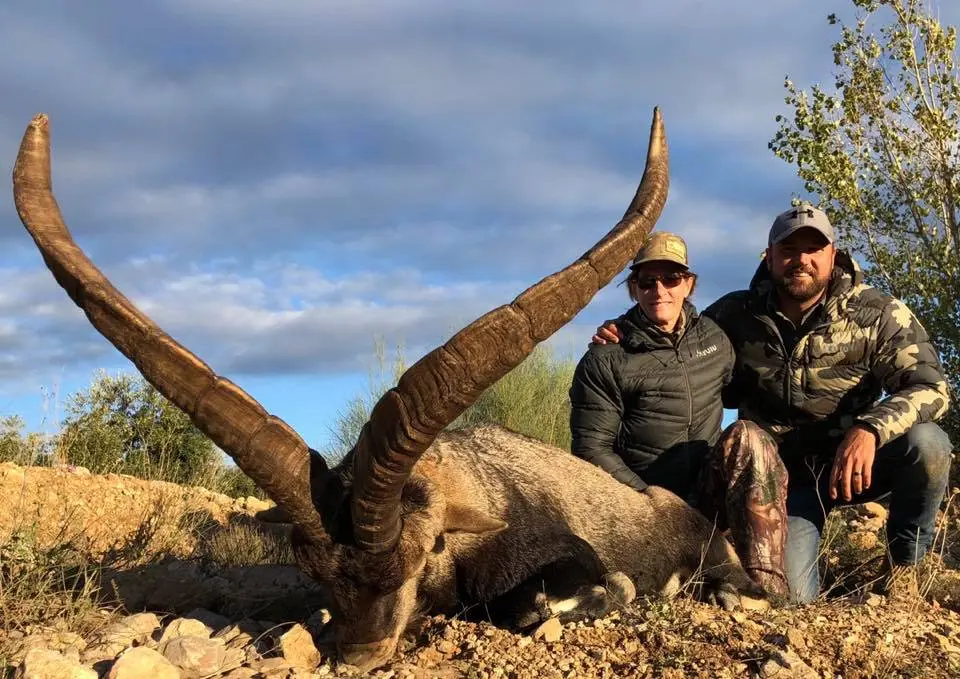
Spain’s ibex trophy opportunities are tightly defined by subspecies distribution, with each animal confined to a specific mountain system and managed under region-specific quota and access frameworks. The Sierra de Gredos in central Spain is the exclusive and tightly managed range of the Gredos ibex, recognized for dark coats, classic lyre-shaped horns, and dependable population density within steep granite terrain. The Beceite Mountains of the Maestrazgo region support the largest-bodied Spanish ibex, producing heavy-framed animals with broad, outward-sweeping horn structures shaped by limestone mountains and pine forest cover. Southeastern ibex are concentrated in southern Spain around the Sierra Nevada National Reserve, where elevation, terrain scale, and population depth support long, backward-curving horn profiles and consistent encounter potential. The Serranía de Ronda in Málaga province is home to the smallest and most range-restricted ibex population, where V-shaped horn configuration, lower densities, and limited habitat demand disciplined selection and precise execution. Across all regions, hunts operate within strictly regulated permit systems, with the November–December rut remaining the most reliable window for accessing mature males under ethical, conservation-driven management.
Takeaway: Select your hunting region based on the specific Spanish ibex subspecies, horn structure, terrain demands, and population dynamics you intend to pursue, aligning location with biology, quota discipline, and controlled field execution.
SECTION: OTHER KEY GAME SPECIES IN SPAIN
What are the hunting seasons for Red Stag in Spain?
The hunting season for Red Stag in Spain typically extends from mid-September through mid-February, structured around biological timing, antler condition, and regional management goals. The most productive period is the berrea (rut), concentrated from late September into early October, when mature stags are highly vocal, mobile, and actively competing, making movement patterns and location more predictable. Outside the rut, Red Stag hunting continues through winter, though tactics shift as stags become less vocal and more pattern-driven, with the season generally closing before antler casting begins in February. Red Stags are widely distributed across Spain, with strong free-range populations in central regions and northern mountain systems, supported by quota-managed, conservation-led frameworks.
Takeaway: Plan Red Stag hunts around late September to early October to align with peak berrea activity, while recognizing that the broader September–February season supports effective, regulation-driven hunting beyond the rut.
Back to Table of Contents
When can you hunt Fallow Deer in Spain?
Fallow Deer hunting in Spain is structured around a long autumn–winter window, typically opening in September and closing in February, with localized extensions on either end depending on the autonomous community. The defining moment of the season is October, when bucks enter la ronca—the fallow rut—marked by intense vocalization, territorial movement, and frequent dominance encounters. This period concentrates mature animals into predictable areas, sharpening glassing efficiency and stalk planning. Both spot-and-stalk and traditional montería hunts are employed, with driven hunts becoming more prevalent from mid-October through winter. Strong, well-managed populations are found across much of Spain, with consistent fallow opportunities in Andalusia and Castile-La Mancha. Earlier or later dates may be available in select regions, but peak execution and antler condition are most reliably aligned immediately after velvet shed and before heavy rut fighting causes damage.
Takeaway: Plan Fallow Deer hunts around October’s la ronca to align with peak movement, vocal behavior, and optimal antler condition within Spain’s regulated September–February season.
Back to Table of Contents
What is the optimal season for Roe Deer hunting in Spain?
The optimal season for Roe Deer hunting in Spain centers on a spring–summer window that balances animal behavior, antler development, and regional regulation, generally running from April through July, with a secondary peak tied to the territorial rut in mid-July. Early-season hunts in April and May capitalize on post-winter movement and feeding patterns, while July offers heightened visibility as mature bucks respond aggressively to rut pressure. In some autonomous communities, limited extensions into late summer or early autumn may apply, though many regions pause activity during peak August heat before reopening around rut-aligned dates. Core roe deer strongholds include Castile and León (notably Burgos and Soria) and parts of Guadalajara, where spot-and-stalk hunting at first and last light remains the standard execution method, aligned with conservation-managed access.
Takeaway: Plan Roe Deer hunts around April for early-season consistency or mid-July for rut-driven buck movement, confirming region-specific dates and heat suspensions before finalizing timing.
SECTION: LEGALITIES, PERMITS, AND ETHICAL HUNTING
What permits are required for international hunters in Spain?
International hunters in Spain must secure a defined set of national and regional documents coordinated through Spanish authorities, with requirements varying by residency status and firearm importation. At minimum, hunters need a valid passport, a hunting license (Licencia de Caza) issued by the specific autonomous community where the hunt takes place, and mandatory hunter liability insurance valid in Spain. An original invitation or contract from a licensed Spanish outfitter is typically required to validate the hunt and initiate permitting.
Hunters importing firearms must obtain a temporary Spanish firearm permit processed through the Guardia Civil, supported by passport details, proof of residency, and full firearm identification (make, model, serial number). EU residents must also carry a European Firearms Pass, while non-EU hunters may be required to file additional customs declarations. Applications are commonly submitted through the nearest Spanish Consulate 30–60 days prior to travel, and documents often require notarization and certified translation. In practice, professional Spanish outfitters manage this process end-to-end to ensure legal compliance, timing accuracy, and field readiness.
Takeaway: Secure autonomous-community hunting licenses, liability insurance, outfitter invitation letters, and, if applicable, Spanish firearm import permits well in advance, as international hunts in Spain require strict, time-sensitive documentation coordinated through official channels.
Back to Table of Contents
How do conservation quotas affect hunting season availability?
Conservation quotas determine when, where, and whether a season remains open by establishing non-negotiable harvest ceilings tied to sustainable population limits. Rather than relying solely on fixed calendar dates, Spanish wildlife authorities use quotas to actively regulate access in real time. When allocated harvest numbers are reached, whether overall or within specific age or sex classes, seasons close immediately, even if the scheduled end date has not been reached. This approach ensures that biological thresholds, not demand or convenience, govern season availability.
Quota design also influences how long a season runs and who may participate. Reduced population indicators can lead to shortened seasons, fewer permits, or tighter bag limits, while higher densities may allow extended access under controlled conditions. In many cases, quotas restrict harvest to adult males to protect breeding capacity or confine hunting to specific management units where populations can absorb pressure. Annual population surveys, habitat assessments, and environmental events, such as disease outbreaks or severe weather, can further override published seasons and suspend hunting entirely in affected areas.
Takeaway: Treat season dates as conditional—availability ultimately depends on quota status, permit allocation, and real-time population management, making early planning and quota-secured access essential.
Back to Table of Contents
What ethical considerations are paramount when hunting in Spain?
Ethical hunting in Spain is grounded in uncompromising legal compliance, conservation-led decision-making, and the humane treatment of wildlife. Hunters are expected to operate strictly within autonomous-community regulations, including holding valid licenses, mandatory civil liability insurance, and written authorization for designated hunting areas. Season dates, bag limits, and species eligibility are enforced to protect population resilience, and ethical execution requires understanding when restraint, not opportunity, is the correct choice. Humane standards are non-negotiable: appropriate equipment, disciplined shot selection, and immediate recovery efforts are required to minimize suffering and uphold fair-chase principles. Respect extends beyond the animal to the land and community—protecting habitat, minimizing environmental impact, honoring private property, and conducting oneself in a manner that reinforces hunting’s role in sustainable wildlife management.
Takeaway: Hunt within the law, respect biological limits, execute humane fair-chase standards, and operate with environmental and community responsibility to ensure ethical, conservation-aligned hunting in Spain.
SECTION: PLANNING YOUR SPANISH HUNTING EXPEDITION
What logistical steps are essential before a hunting trip to Spain?
Essential logistical steps before a Spain-based hunt begin with engaging a qualified, local outfitter to manage region-specific licenses, mandatory liability insurance, and firearm import permits or rifle rental. Non-EU hunters must submit passport details, flight itineraries, and an original outfitter invitation through the Spanish Consulate—typically no less than three weeks prior to departure—to clear entry and firearms approvals. Because Spain operates under 17 autonomous communities, hunters must also confirm all region-required hunting seals and documentation tied to the exact concession.
Logistics extend beyond paperwork. Firearms and ammunition must be transported in separate, locked cases and declared to airlines and Spanish authorities on arrival, with airport-to-concession transfers coordinated in advance, as firearms are often processed through local police or Guardia Civil stations before release. Field readiness requires broken-in mountain boots, layered clothing for rapidly changing alpine weather, quality optics, and navigation tools, all matched to terrain and season. Delegating this complexity to an experienced Spanish outfitter reduces administrative risk and preserves focus on safe, disciplined execution in the field.
Takeaway: Secure outfitter-managed permits, consular documentation, firearm approvals, regional seals, transport coordination, and terrain-appropriate gear well in advance to ensure clean entry, legal compliance, and uninterrupted hunting operations in Spain.
Back to Table of Contents
Why is professional outfitter guidance crucial for hunting in Spain?
Professional outfitter guidance is essential for executing a lawful, safe, and conservation-aligned hunt within Spain’s highly decentralized and tightly regulated hunting system. Each autonomous community enforces distinct licensing rules, species permits, insurance requirements, and quota controls, creating administrative and legal complexity that is impractical for international hunters to manage independently. Experienced outfitters coordinate all permitting and compliance, streamline firearm importation or regulated rifle rental, and manage trophy classification, fee structure, and export documentation in accordance with Spanish law. Beyond compliance, professional guides deliver localized terrain access, subspecies-specific timing, and behavior-driven field strategy, applying disciplined spot-and-stalk techniques informed by weather, elevation, and seasonal movement. Their oversight also ensures strict safety protocols, ethical harvest standards, and conservation-first decision-making, allowing hunters to operate confidently in rugged, unfamiliar environments while remaining fully aligned with Spain’s wildlife management objectives.
Takeaway: Rely on a qualified Spanish outfitter to manage regulatory complexity, firearm and trophy logistics, local access, and ethical field execution, ensuring a controlled, compliant, and professionally guided hunt in Spain.
Plan Your Spain Ibex Hunt
Explore our Spain ibex hunting program with Global Hunting Solutions and 4 Aces Outfitters Spain. We can help match your preferred ibex, travel dates, and plans for accompanying guests.