
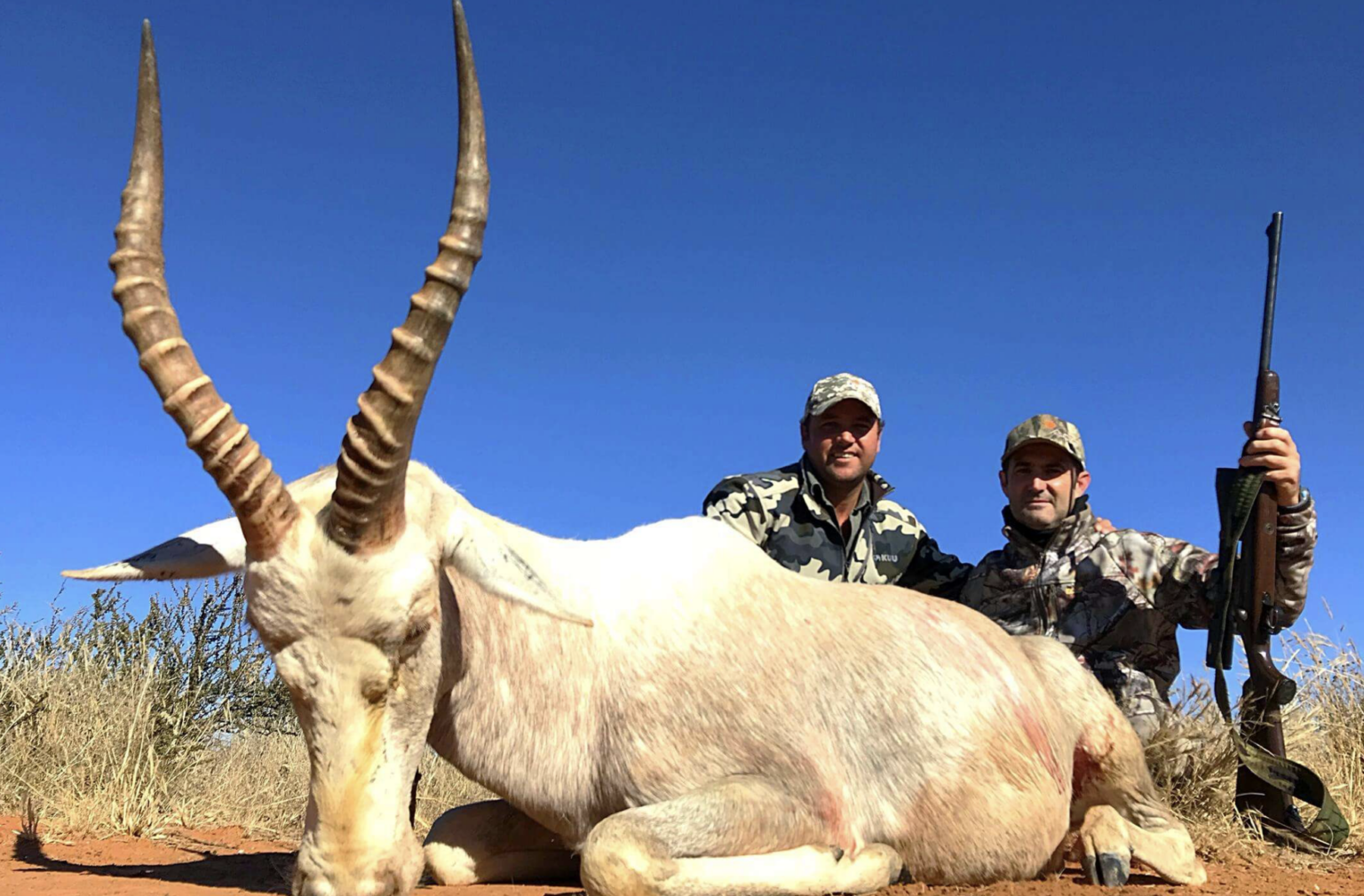
Quick Summary / Key Takeaways
If you only remember 5 things from this guide, make it these:
- South African plains game hunting spans open savannah, bushveld, and transitional terrain, requiring adaptive field strategy rather than uniform pursuit.
- Ethical, quota-based hunting operates within regulated, conservation-managed concession systems that directly support wildlife management, enforcement, and local livelihoods.
- Consistent success depends on species-specific behavior knowledge, terrain awareness, wind discipline, and experienced tracking—not chance, speed, or volume-driven pressure.
- Selecting a proven, licensed outfitter with professional hunters, managed concessions, and disciplined operational standards is critical to safety, legal compliance, and ethical outcomes.
- Effective preparation prioritizes rifle familiarity, basic field fitness, and readiness for variable shooting distances, supporting controlled, ethical execution throughout the safari.

Introduction
South Africa’s privately managed hunting landscapes offer some of the most consistently regulated and conservation-driven plains game hunting in the world.This is not positioned as a casual escape or spectacle; it is a deliberate, management-led hunting environment that demands discipline, respect for the land, and accountability to wildlife management objectives. For decades, Global Hunting Solutions has guided experienced hunters across savannah systems, open plains, and bushveld terrain, pursuing species such as Kudu, Gemsbok, Impala, Wildebeest, and Zebra under structured, quota-based programs.
This guide is designed to remove broad generalities and focus on field execution—including species behavior, habitat use, ethical shot selection, and preparation standards required for a controlled, professional plains game safari. The emphasis is on informed decision-making rather than romanticized narrative, supporting hunters who value clarity, conservation alignment, and operational readiness.
Ethical plains game hunting in South Africa functions as an integrated wildlife management tool, with licensed concessions, professional hunters, and direct reinvestment into habitat management, wildlife oversight, and local employment forming the operational backbone. Each hunt contributes directly to population monitoring and sustainable use, reinforcing long-term species viability rather than short-term outcomes.
This overview is intended for hunters who value disciplined execution, conservation accountability, and a refined but field-driven experience, approaching South African plains game not as a novelty, but as a serious, regulated hunting pursuit grounded in experience, stewardship, and measured operational excellence.
Common Plains Game Species & Characteristics
| Species | Typical Habitat | Hunting Challenge | Conservation Status |
| Kudu | Dense bushveld and broken, rocky hills | Highly alert, elusive, relies on cover and wind advantage | Least Concern |
| Gemsbok | Arid savanna and semi-desert plains | Exceptionally resilient; requires disciplined shot placement | Least Concern |
| Impala | Savanna woodland and riverine corridors | Fast-reacting herd behavior; demands precise timing | Least Concern |
| Warthog | Open grasslands with access to cover and burrows | Cautious, unpredictable movement; quick acceleration | Least Concern |
Essential Gear for Plains Game Hunting
| Gear Item | Purpose | Key Specification | Why It Matters |
| Rifle | Controlled, ethical harvest | .30-06 Springfield, .308 Winchester, 7mm Remington Magnum, .300 Win Mag | Proven accuracy and adequate terminal performance across plains game species at typical 100–300 yard distances |
| Optics | Target identification and shot confirmation | Quality binoculars (8x–10x magnification) and a reliable, well-zeroed scope | Clear glass supports disciplined animal assessment and precise shot placement in varied light and terrain |
| Boots | Comfort and support | Well-broken-in, durable boots with ankle stability | Sustained walking over savanna, bushveld, and mixed ground requires reliable footing |
| Clothing | Camouflage, protection | Layered, breathable fabrics in muted earth tones | Supports temperature regulation and reduces visual contrast in open and transitional terrain |
Pre-Safari Planning & Compliance
- Confirm hunt dates, licensed concession access, and permit timelines with GHS.
- Coordinate firearm import approval or pre-arranged rifle rental documentation through South African authorities.
- Finalize international arrival and in-country transfers aligned with the safari itinerary.
- Arrange travel insurance that covers hunting activities, medical evacuation, and international travel.
Post-Safari Wrap-Up & Export Coordination
- Confirm field trophy preparation, permitting, and export coordination through GHS-managed partners.
- Participate in a post-hunt operational debrief to review execution, outcomes, and feedback.
- Secure and catalog photos and field records in accordance with ethical and regulatory standards.
- Discuss future hunts, conservation-aligned return opportunities, or extended safari options with GHS.

Table of Contents
SECTION 1: Understanding Plains Game
- What defines South African plains game animals?
- Which plains game species are most commonly hunted in South Africa?
- How do different plains game species adapt to varied landscapes?
- What are the typical behaviors of key plains game animals?
SECTION 2: Ethical Hunting & Conservation
- How does ethical plains game hunting contribute to conservation?
- What role do local communities play in sustainable hunting practices?
- What regulations govern plains game hunting in South Africa?
- How can hunters ensure their safari supports responsible wildlife management?
SECTION 3: Planning Your Plains Game Safari
- What is the best time of year to hunt plains game in South Africa?
- What caliber rifles are suitable for most plains game species?
- What essential gear should I pack for a plains game hunt?
- How do I choose a reputable plains game outfitter?
SECTION 4: The Hunting Experience
- What can I expect during a typical day of plains game hunting?
- What tracking and stalking techniques are effective for plains game?
- How do I prepare physically and mentally for a challenging plains game hunt?
Frequently Asked Questions
SECTION 1: Understanding Plains Game
FAQ 1: What defines South African plains game animals?
South African plains game animals are free-ranging, non-dangerous hoofed species managed within regulated, quota-based conservation systems, typically found across savanna, bushveld, and transitional terrain rather than confined habitats.Species such as kudu, gemsbok, impala, wildebeest, and zebra are not classified as dangerous game, but require disciplined fieldcraft, precise shot placement, and species-specific assessment. Plains game play an integral role in ecosystem balance and wildlife management, with harvest structured around quotas, carrying capacity, and long-term sustainability. Their pursuit emphasizes tracking proficiency, terrain interpretation, wind discipline, and ethical decision-making, rather than volume or convenience.
Takeaway: Understand South African plains game as free-ranging, conservation-managed hunting species that demand disciplined execution and ethical judgment across diverse African landscapes.
FAQ 2: Which plains game species are most commonly hunted in South Africa?
Kudu, Impala, Gemsbok, and Warthog are among the most frequently pursued plains game species in South Africa, managed within regulated, conservation-managed quota-based hunting systems.Kudu are evaluated primarily by maturity and horn development and are known for cautious, terrain-dependent behavior, while Impala present high-alert herd dynamics that demand precise timing and disciplined shot execution. Gemsbok offer a demanding pursuit in arid and open terrain, requiring deliberate stalk planning and wind awareness, and Warthog are typically taken as situational opportunities, with emphasis on positioning and shot selection rather than extended pursuit. Together, these species span a range of terrain, behavior patterns, and execution requirements, making them core pillars of a structured plains game safari.
Takeaway: Focus on Kudu, Impala, Gemsbok, and Warthog as foundational plains game species, each requiring species-specific fieldcraft, ethical shot discipline, and terrain-aware execution rather than novelty or volume.
FAQ 3: How do different plains game species adapt to varied landscapes?
Plains game species exhibit highly specialized adaptations to South Africa’s region-specific, conservation-managed landscapes, ranging from arid plains to dense bushveld and broken terrain.Kudu thrive in thick cover and rocky hills, using natural camouflage, acute hearing, and terrain awareness to manage pressure and avoid exposure. Gemsbok are exceptionally adapted to arid and semi-desert environments, capable of efficient water retention and heat tolerance under prolonged open-terrain conditions. Impala favor savanna woodland and riverine corridors, relying on speed, coordinated herd vigilance, and rapid flight responses. Warthogs occupy mixed terrain, utilizing burrows for thermal regulation and predator avoidance, while feeding opportunistically across grasslands and woodland edges within stable home ranges.
Takeaway: Effective plains game hunting requires understanding how each species’ physical and behavioral adaptations align with terrain, vegetation structure, and environmental pressure across South Africa.
FAQ 4: What are the typical behaviors of key plains game animals?
Key plains game animals display distinct, terrain-influenced behavioral patterns that are critical for disciplined, ethical hunting.Kudu are typically solitary or loosely grouped, relying on exceptional hearing, visual camouflage, and broken cover to evade pressure rather than prolonged flight. Impala operate in highly alert herd structures, using constant movement, sentry behavior, and explosive speed when threatened. Gemsbok are resilient and assertive animals, known for measured defensive responses when pressured, particularly in open or arid terrain. Warthogs are opportunistic foragers, commonly moving during daylight hours and using burrows for security and thermal protection, with escape behavior that is often fast, directionally unpredictable, and terrain-driven.
Takeaway: Understanding species-specific behavior—cover reliance, herd dynamics, defensive responses, and escape patterns—is essential for ethical shot selection and controlled, conservation-aligned execution during a plains game hunt.
SECTION 2: Ethical Hunting & Conservation
FAQ 5: How does ethical plains game hunting contribute to conservation?
Ethical plains game hunting contributes to conservation through regulated, quota-based management systems that directly fund wildlife oversight, habitat management, and anti-poaching enforcement within licensed concessions.Hunting revenues are allocated through formal, audited channels to support population monitoring, land stewardship, and long-term professional wildlife management, rather than uncontrolled harvest. Selective, biologically informed harvest helps maintain balanced population levels, habitat carrying capacity, and long-term ecosystem health, reducing pressure from overpopulation, habitat degradation, and disease. Conservation outcomes are embedded as a core operational requirement of the hunting framework, not an indirect byproduct.
Takeaway: Ethical plains game hunting functions as a regulated conservation tool, where licensed harvest, reinvestment into habitat and enforcement, and population oversight work together to support measurable, long-term wildlife sustainability.
FAQ 6: What role do local communities play in sustainable hunting practices?
Local communities are operational partners in sustainable hunting systems, with direct involvement and benefit tied to regulated, conservation-managed concessions.Hunting revenue supports local employment, skills development, and long-term economic stability through roles such as trackers, skinners, camp staff, and logistics support, creating clear, tangible incentives for wildlife protection. This structure aligns community livelihoods with conservation outcomes, reducing poaching pressure and reinforcing lawful wildlife stewardship. Generational knowledge of terrain, animal movement, and seasonal conditions further strengthens ethical execution and safety in the field.
Takeaway: Sustainable hunting succeeds when local communities are integrated as economic and operational stakeholders, reinforcing conservation, accountability, and long-term wildlife protection.
FAQ 7: What regulations govern plains game hunting in South Africa?
Plains game hunting in South Africa operates within a structured national and provincial regulatory framework designed to ensure lawful, conservation-driven wildlife management rather than discretionary harvest.These regulations govern hunter and outfitter licensing, species-specific quotas, seasonal access, approved methods of take, and concession oversight. All plains game hunts must be conducted under the direct supervision of a licensed Professional Hunter (PH), who is legally accountable for field compliance, animal selection, and adherence to provincial statutes. This system ensures population balance, habitat protection, and enforceable accountability across private and communal hunting areas.
Takeaway: Plains game hunting in South Africa is regulated through licensed Professional Hunters, quota-based species management, and province-specific oversight, ensuring ethical execution and long-term conservation compliance.
FAQ 8: How can hunters ensure their safari supports responsible wildlife management?
Hunters ensure responsible wildlife management by selecting licensed outfitters operating within formally regulated, conservation-managed concession systems rather than relying on informal or reputation-based assurances.Due diligence should focus on an outfitter’s concession tenure, quota controls, Professional Hunter licensing, and documented coordination with provincial wildlife authorities, rather than marketing claims or affiliations alone. Responsible operations demonstrate verifiable population management, reinvestment into habitat and enforcement, and direct, structured involvement of local communities as economic stakeholders. Hunting conducted within these frameworks functions as a deliberate wildlife management mechanism, where revenue directly supports oversight, anti-poaching enforcement, and long-term species viability.
Takeaway: Choose outfitters operating within licensed, quota-governed concessions, provincially supervised management systems, and community-integrated conservation frameworks to ensure your safari supports accountable, long-term wildlife management.
SECTION 3: Planning Your Plains Game Safari
FAQ 9: What is the best time of year to hunt plains game in South Africa?
The primary plains game hunting window in South Africa typically aligns with the dry winter period from May through September, when reduced vegetation density improves visibility and animal movement patterns become more predictable.Cooler daytime temperatures support sustained, deliberate field time, while limited surface water naturally concentrates game activity without disrupting established movement patterns. These conditions support disciplined glassing, structured stalk planning, and ethical shot execution across varied terrain. Season selection should be based on field conditions and execution preference, not calendar convenience or peak demand alone.
Takeaway: Schedule plains game hunts during the May–September dry season to take advantage of improved visibility, cooler conditions, and naturally concentrated game movement that support controlled, ethical execution.
FAQ 10: What caliber rifles are suitable for most plains game species?
For most South African plains game, a versatile rifle in the .30-06 Springfield, .308 Winchester, .300 Winchester Magnum, or 7mm Remington Magnum range is well-suited for ethical shot execution across common species from Impala through Kudu.These calibers provide reliable external and terminal performance, manageable recoil, and consistency when paired with appropriate bullets and disciplined shot placement. For larger or heavier-bodied plains game such as Eland or mature Gemsbok, calibers such as the .338 Winchester Magnum or .375 H&H Magnum may be appropriate based on terrain, distance, and shooter proficiency. Bullet selection, rifle familiarity, and shot discipline remain more critical than caliber choice alone.
Takeaway: Select a proven, familiar caliber suited to your target species and terrain, prioritizing bullet performance, rifle confidence, and disciplined shot placement over raw power.
FAQ 11: What essential gear should I pack for a plains game hunt?
Essential gear for a plains game hunt includes a field-proven rifle paired with quality, properly zeroed optics, durable, well-broken-in boots suited for savannah and bushveld terrain, and layered, breathable clothing in muted earth tones to manage temperature shifts and reduce visual contrast.Reliable binoculars, a rangefinder appropriate for variable shooting distances, a headlamp for early starts and low-light movement, and a compact daypack for water, ammunition, and critical field essentials are standard requirements. Personal medications, sun protection, and mission-critical personal items should be included to support sustained, safe time in the field. Proper gear selection supports controlled execution, comfort, and safety in varied African terrain.
Takeaway: Pack proven, terrain-appropriate equipment—including a familiar rifle and optics, dependable footwear, layered neutral clothing, and essential field tools—to support safe, disciplined, and ethical plains game hunting.
FAQ 12: How do I choose a reputable plains game outfitter?
Choose a reputable plains game outfitter by verifying their licensing, concession tenure, and Professional Hunter credentials rather than relying on testimonials or marketing claims alone. Evaluate their operational transparency, species-specific quota controls, and alignment with provincial wildlife authorities to confirm ethical and legal compliance.Clear communication around pricing, logistics, and regulatory obligations is essential, as is demonstrated experience managing free-ranging game within formally managed conservation systems. Avoid operators who imply guarantees, high-volume outcomes, or unusually discounted pricing, as these signals often conflict with ethical, quota-driven hunting standards.
Takeaway: Select outfitters with licensed concessions, transparent operations, provincially supervised harvest frameworks, and documented conservation alignment to ensure an ethical, credible plains game safari.
SECTION 4: The Hunting Experience
FAQ 13: What can I expect during a typical day of plains game hunting?
A typical day of plains game hunting begins before first light with a focused briefing and light breakfast, aligned with weather, species objectives, and terrain conditions, followed by movement into the field with a licensed Professional Hunter and experienced trackers.Time in the field is spent systematically glassing, tracking, and stalking across savanna and bushveld terrain, with distance and pace dictated by species behavior and conditions rather than routine. Midday breaks are taken as conditions allow—either in the field or back at camp—to manage heat, energy, and positioning. The afternoon resumes with deliberate hunting until last light, concluding with return to camp for recovery, equipment checks, and subsequent-day planning rather than leisure-focused downtime. Days are physically accessible but mentally demanding, emphasizing disciplined execution over pace.
Takeaway: Expect early starts, structured field time, disciplined tracking and glassing, and days planned around conditions and ethical execution rather than fixed schedules or camp routine.
FAQ 14: What tracking and stalking techniques are effective for plains game?
Effective plains game tracking and stalking rely on disciplined fieldcraft, species-specific behavior knowledge, and coordinated decision-making between the licensed Professional Hunter and experienced trackers rather than improvisation or speed.Trackers interpret spoor, ground disturbance, feeding sign, and travel patterns to establish direction, tempo, and animal intent, not just presence. Stalking is governed by wind control, terrain masking, light management, and deliberate foot placement to close distance without alerting the animal. Patience, spacing, and shot discipline are prioritized, with each approach adjusted to species behavior, vegetation density, and visibility rather than a fixed or formulaic method.
Takeaway: Successful plains game stalking depends on wind discipline, terrain use, spoor interpretation, and patient, species-specific execution rather than hurried movement or generic technique.
FAQ 15: How do I prepare physically and mentally for a challenging plains game hunt?
Prepare physically for a plains game hunt through structured cardiovascular conditioning, lower-body strength work, and regular walking over uneven ground—preferably in terrain-matched, broken-in hunting boots.Mental preparation centers on discipline, situational awareness, and decision-making under variable field conditions, as days often involve extended tracking, changing plans, and deliberate pacing rather than constant action. Field shooting practice from realistic, unsupported positions supports confidence and ethical execution. Understanding that not every stalk results in a shot is part of controlled, fair-chase execution, and maintaining focus throughout the process is essential.
Takeaway: Build terrain-appropriate fitness, reinforce mental discipline and patience, and practice field-position shooting to support safe, ethical, and effective plains game hunting.
