
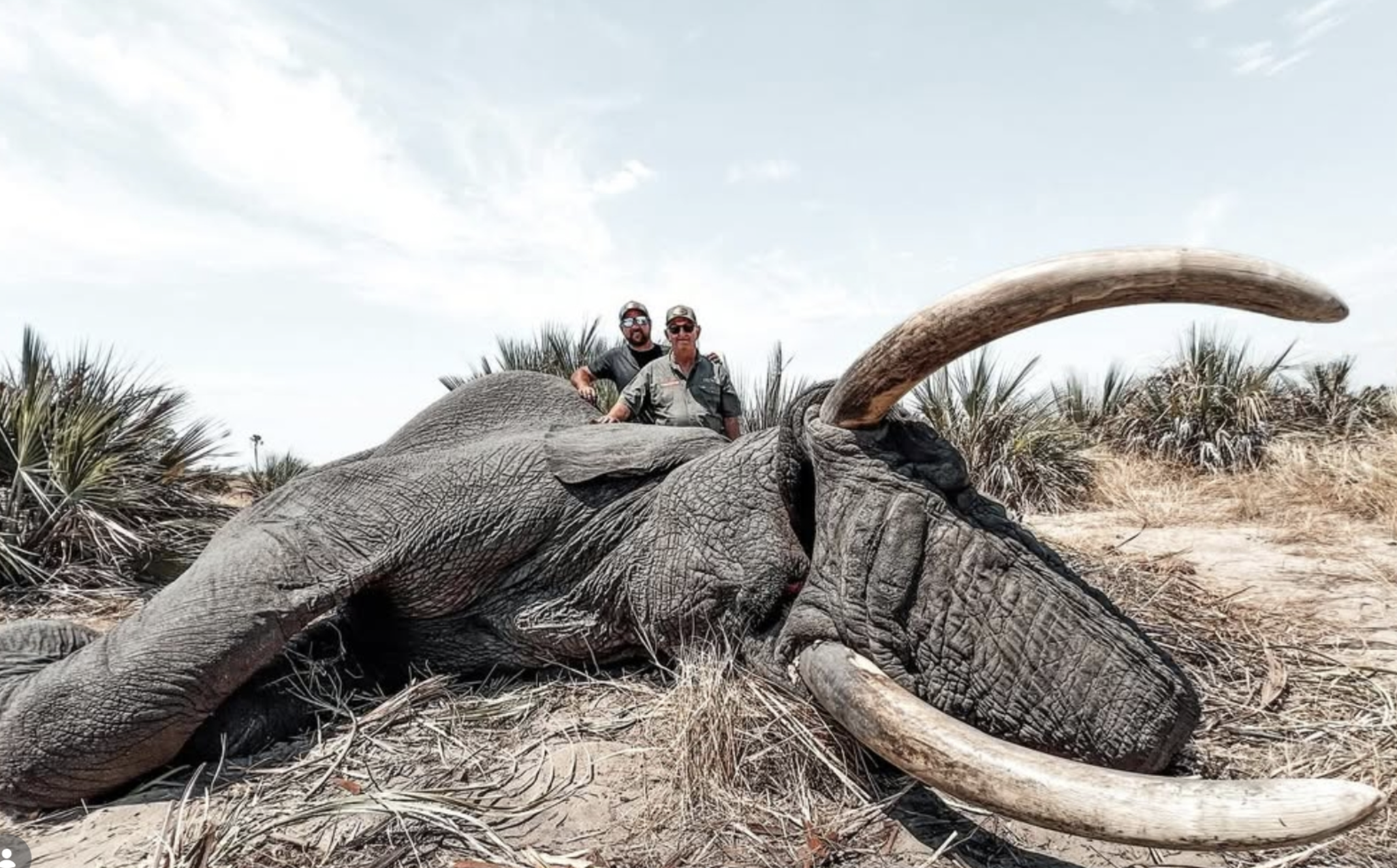
Botswana is not a beginner plains game trip. This is a dangerous game country at full scale. At Global Hunting Solutions, our owner-led approach means you’ll hunt alongside the people who built the operation, including Travis Wier, Adam Barnard, and Jose Aranda through 4 Aces Safari Outfitters Africa, not through a chain of booking agents or third-party handoffs. If you’re researching Botswana hunting opportunities or considering hunting in Botswana for the first time, understanding how these safaris actually work is just as important as choosing the destination itself.
Botswana’s reputation was built on vast wilderness, mature dangerous game, and some of Africa’s last truly wild free-range hunting concessions. The experience is demanding, rewarding, and deeply rooted in fair-chase principles. This is not a quick plains-game package or a high-volume hunting operation. It is a destination for hunters seeking an authentic, dangerous-game experience in remote country.
This is Africa as it was meant to be experienced.
Whether you’re evaluating elephant, Cape buffalo, or leopard opportunities, this guide will walk through what a guided hunt in Botswana actually looks like, from the role of your professional hunter (PH) to conservation realities, trip logistics, and what sets an owner-led outfitter apart.
[Book Your Hunting Experience]
[Botswana safari hunts with GHS]
Botswana as a Dangerous-Game Hunting Destination
There are several respected hunting destinations across Africa, but Botswana occupies a distinct place among serious dangerous-game hunters. The country’s hunting areas are defined by remote wilderness, low hunting pressure, and vast concession blocks that remain largely unchanged by modern development. For many hunters, that combination is what places Botswana among the most serious destinations for big game hunting in Botswana.
Much of the hunting takes place within government-managed wilderness concession areas bordering some of Africa’s most iconic landscapes, including the Okavango Delta. These regions provide access to habitats capable of supporting healthy populations of dangerous game while maintaining the wild character that hunters travel halfway around the world to experience.
Global Hunting Solutions operates in approximately 1.5 million acres of hunting concessions, providing access to immense stretches of free-range wilderness. There are no game farms and no artificially contained hunting environments. The animals move naturally through the landscape, responding to seasonal conditions, water availability, and hunting pressure exactly as they have for generations.
True free-range hunting; no fences, just wild Africa.
That distinction matters. In Botswana, success is earned through preparation, tracking ability, patience, and time in the field. The experience is built around the hunt itself rather than convenience. For hunters seeking authentic safari hunting in Botswana, that reality remains one of the country’s defining draws.
Free-Range vs. Fenced: Why the Distinction Matters
When discussing trophy hunting in Botswana, one topic consistently comes up among experienced hunters: free-range versus fenced hunting.
Botswana prohibits high-fence hunting operations, meaning hunters pursue game in open wilderness rather than enclosed properties. Animals are free to move across vast landscapes according to natural migration patterns, water sources, and seasonal conditions. That freedom fundamentally changes the hunt.
In practical terms, fair-chase hunting requires more tracking, more patience, and a greater commitment from both hunter and professional hunter (PH). A mature bull elephant may cover significant distances in a single day. A buffalo track that looks promising at sunrise may lead hunters across miles of country before an opportunity presents itself. Success cannot be scheduled or manufactured.
For Global Hunting Solutions clients, that experience unfolds through free-range Botswana hunting concessions supported by GHS’s broader access to approximately 1.5 million acres of hunting concessions worldwide. The size of the concessions creates opportunities for genuinely wild encounters while maintaining the unpredictability that defines dangerous-game hunting.
Authentic fair-chase hunting in pristine wilderness.
While fenced operations exist elsewhere in Africa, Botswana’s hunting identity is built on open-country hunting. For serious hunters, that distinction often influences not only the difficulty of the hunt but also the overall depth of the experience. The challenge, uncertainty, and sense of accomplishment associated with pursuing mature animals in unrestricted terrain remain central to what makes Botswana different.
That same commitment to authenticity extends beyond the landscape itself. The way a safari is guided, managed, and conducted in the field can have just as much impact on the experience as the country where it takes place.
What Guided Hunting in Botswana Actually Looks Like
Many hunters researching hunting safaris in Botswana focus on species, terrain, trip length, PH experience, and operator credibility. Those factors matter, but the daily reality of a dangerous-game safari is what ultimately shapes the experience. Understanding how the hunt operates and who you’ll be hunting with helps set realistic expectations before you ever step into camp.
At the center of every safari is the licensed professional hunter (PH). A PH serves as far more than a guide. He is the licensed field authority responsible for the hunt, the coordinator of trackers and support staff, the person making field judgments on animal age and suitability, and the individual responsible for critical decisions when pursuing dangerous game. Whether tracking an elephant through thick mopane or following a lone buffalo track at first light, the PH is constantly reading conditions, interpreting signs, and directing the hunt.
The difference with Global Hunting Solutions is that clients are not handed off to unknown operators after booking. Hunt with the owners. Travis Wier, Adam Barnard, and Jose Aranda are directly involved in the operation and hunting experience. There is no disconnect between the conversation you have before the safari and the people guiding you in the field.
No booking agents. No middlemen.
A typical day begins well before sunrise. Coffee is usually waiting before first light while trackers and staff prepare vehicles and equipment. The goal is to reach hunting areas early enough to locate fresh signs before temperatures begin to rise.
For elephant and buffalo hunts, much of the day revolves around tracking and foot stalks. Fresh tracks are located, evaluated, and followed on foot. Depending on conditions, hunters may spend several hours moving through thick cover, reading spoor, and assessing animals before an opportunity develops.
During the hottest part of the day, activity often slows. Hunters return to camp for lunch, rest, and preparation for the afternoon session. Luxury accommodations, private-chef service, and disciplined camp support play an important role here. Dangerous-game hunting is physically demanding, and recovery matters.
Afternoons may involve additional tracking, glassing likely travel routes, checking leopard bait sites, or repositioning based on information gathered earlier in the day. Evenings are typically spent around camp reviewing the day’s events and planning for the next morning.
This schedule repeats day after day because dangerous game rarely operates on a predictable timeline. That is one reason most Botswana hunting safari experiences run between 12 and 18 days. The additional time allows hunters and PHs to make thoughtful decisions rather than forcing outcomes under a compressed schedule.
For many experienced hunters, the rhythm itself becomes part of the appeal. Long days in wild country, careful decision-making, and direct involvement in the pursuit create an experience that feels fundamentally different from faster-paced hunting programs elsewhere.
The Big Three in Botswana: Elephant, Cape Buffalo, and Leopard
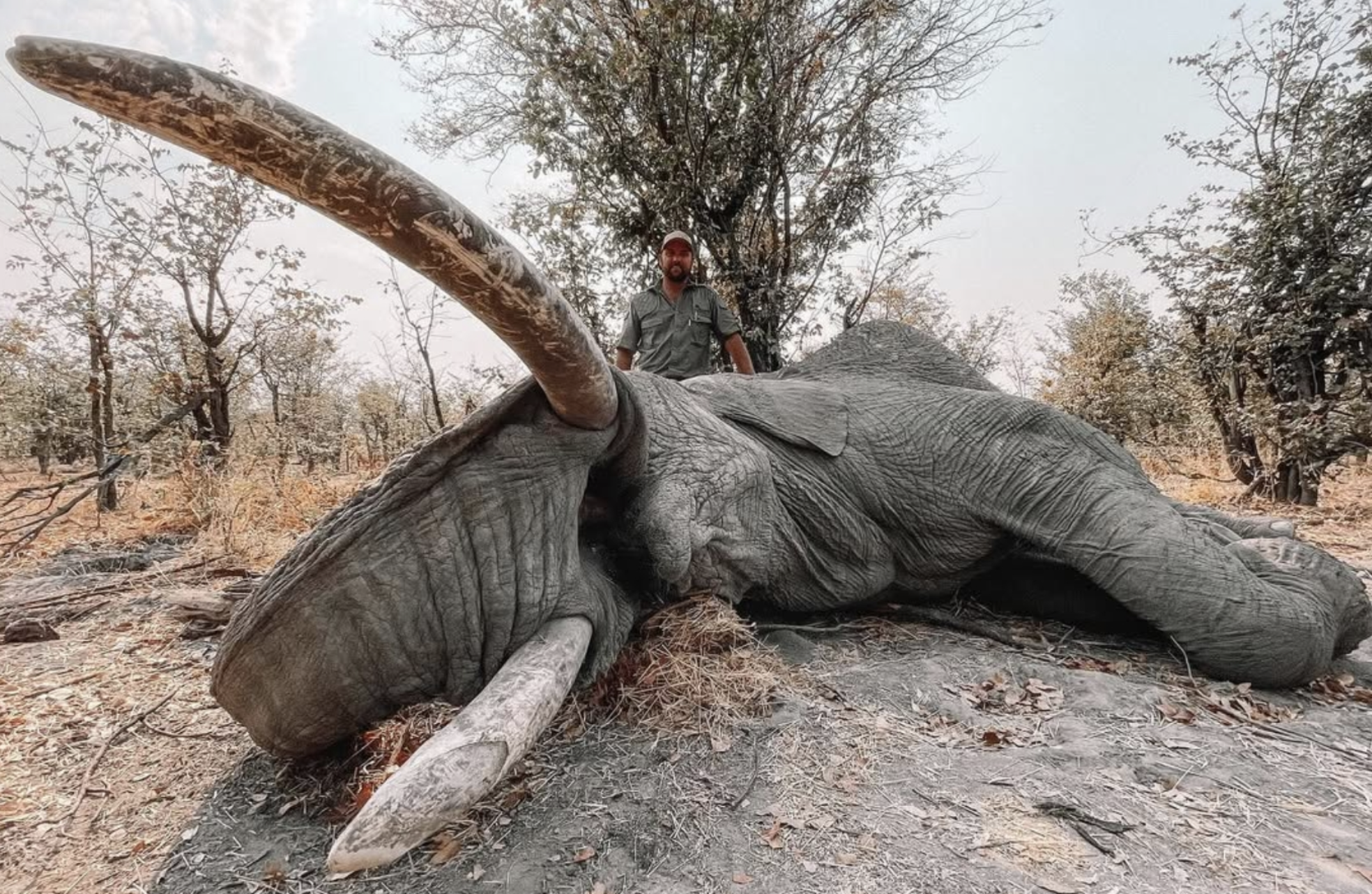
Botswana has earned its reputation largely because of three iconic species: elephant, Cape buffalo, and leopard. These animals represent the core of dangerous game hunting in Botswana, each demanding a different approach, different skills, and a different mindset.
What connects them is the challenge. Success depends on preparation, patience, and the ability to adapt to changing conditions rather than simply covering ground and waiting for an opportunity.
Elephant: The Land of Giants
For many hunters, elephant hunting in Botswana is the primary reason to visit the country.
Botswana is home to an estimated 130,000 to 140,000 elephants, the largest elephant population in Africa, and pursuing mature bulls in free-range wilderness is one of hunting’s most physically and mentally demanding experiences. Days often begin by locating fresh tracks and then following them for hours on foot across varied terrain. Distances can be significant, and conditions can change quickly.
The process involves far more than simply finding elephants. Professional hunters (PHs) must evaluate age, ivory characteristics, and suitability while remaining aware of wind direction, herd dynamics, and safety considerations. Reading ivory becomes part science and part experience.
The final stages of an elephant hunt often unfold at close range. Hunters may spend hours tracking before the opportunity to pursue a mature bull presents itself. Patience, discipline, and shot placement become critical.
For many hunters, the reward is not simply the outcome but the experience of tracking one of Africa’s most intelligent and powerful animals through truly wild country.
Cape Buffalo: The Dagga Boys
Cape buffalo have earned their reputation honestly.
Among dangerous game species, few animals command more respect than an old buffalo bull. The most sought-after animals are often solitary dagga boys, older bulls that have left the breeding herds and spend much of their time alone or in small bachelor groups.
Buffalo hunting is a game of details. Hunters and PHs study tracks, evaluate movement patterns, and spend significant time assessing animals before making a decision. One of the key indicators of maturity is boss development. Experienced hunters pay close attention to heavy bosses and overall horn structure when evaluating a bull.
Unlike herd bulls, mature dagga boys often display different behavior patterns and can be found in thick cover where visibility is limited. Encounters frequently occur at close range, adding to both the challenge and intensity of the hunt.
This combination of tracking, judgment, and proximity is what makes buffalo hunting one of the most respected pursuits in Africa.
Leopard: Patience and Precision
If elephant hunting is defined by movement and buffalo hunting by intensity, leopard hunting in Botswana is defined by patience.
Leopard hunts typically begin long before a hunter enters a blind. Bait locations must be selected carefully, activity monitored, and patterns established. Days may pass while a mature tom develops confidence around a particular bait site.
The process rewards discipline. Every decision, from bait placement to blind location, affects the outcome. Success often depends on remaining patient while waiting for a mature cat to present a suitable opportunity.
Botswana’s remote concessions provide habitat capable of supporting leopard populations, particularly in areas where hunting pressure remains low. Even so, leopard hunting remains one of Africa’s most challenging pursuits.
No reputable outfitter can promise a specific outcome, and serious hunters understand that. The goal is not a guarantee. The goal is an authentic fair-chase experience conducted in quality leopard country with the time and preparation necessary to pursue mature animals responsibly.
Together, elephant, buffalo, and leopard form the foundation of Botswana’s dangerous-game hunting. Each species demands something different from the hunter, but all three reward preparation, persistence, and respect for the process.
Addressing Conservation and the Elephant Hunting Conversation
No discussion of Botswana elephant hunting is complete without addressing conservation. For many hunters researching the destination, questions about legality, wildlife management, and the broader conservation impact of hunting are just as important as questions about species and hunting opportunities.
The conversation is often presented as a simple argument for or against hunting. The reality is far more complex. Botswana manages wildlife through a regulated framework involving government agencies, scientific data, community interests, conservation objectives, and international agreements.
According to Botswana’s Department of Wildlife and National Parks (DWNP) and the Botswana Ministry of Environment and Tourism, Botswana maintains the largest elephant population in Africa, estimated at 130,000–140,000 animals. This concentration of elephants creates unique management challenges, particularly in northern regions where human-elephant conflict affects local communities, agriculture, and infrastructure.
The African savanna elephant is listed as Endangered on the IUCN Red List. At the same time, the IUCN recognizes that conservation challenges vary significantly between regions and populations. In Botswana, wildlife managers must balance elephant conservation with habitat capacity, human-wildlife conflict, and long-term sustainability.
For hunters researching the Botswana elephant hunting debate, understanding how hunting is regulated is important. Scientifically managed annual hunting quotas are established through wildlife management processes administered by Botswana’s Department of Wildlife and National Parks. These quotas are intended to support broader conservation and management objectives while ensuring hunting remains controlled and sustainable.
The international movement of elephant trophies is governed through the Convention on International Trade in Endangered Species of Wild Fauna and Flora (CITES). Botswana’s elephant population falls under a CITES Appendix II framework, which allows a legal trophy export pathway through the appropriate permit process when both Botswana and the importing country authorize that movement.
Another aspect of the discussion involves conservation funding. Revenue generated through legal hunting contributes to anti-poaching efforts, employment opportunities in rural communities, wildlife management activities, and habitat protection within concession areas. In many remote regions, hunting operations help maintain large tracts of wildlife habitat that might otherwise face competing land-use pressures.
Reasonable people can disagree about hunting. What matters for prospective hunters is understanding the regulatory framework under which these safaris operate. Botswana’s approach relies on government oversight, quota management, conservation monitoring, and international compliance requirements. For hunters considering elephant hunting in Botswana, those facts provide important context.
What Drives the Cost of a Botswana Hunting Safari
One of the most common questions hunters ask involves cost. While many people search for Botswana hunting prices, there is no single answer because every safari is influenced by multiple factors.
The first major variable is trip length. Most dangerous-game hunts in Botswana run between 12 and 18 days. Longer hunts require additional staff support, camp operations, vehicle usage, fuel, and logistics, all of which affect overall cost.
Species selection also plays a significant role. Different animals require different quotas, permits, and hunting strategies. Pursuing dangerous game often involves additional planning, specialized staff, and longer periods in the field compared to other types of hunting.
Government licensing requirements, concession access fees, and quota-related fees are another factor. Botswana maintains a regulated wildlife management system, and legal hunting involves compliance with applicable permits and wildlife regulations.
The location of the hunt matters as well. Many of the country’s remote hunting concessions are located in wilderness areas where transportation, supplies, and camp operations require substantial logistical support. Simply reaching some hunting areas can involve multiple stages of travel and coordination.
Professional hunter services are another important consideration. Experienced PHs, trackers, skinners, camp staff, and support personnel all contribute to the success of the safari. Dangerous-game hunting is a team effort, and that expertise forms a significant part of the experience.
Travel logistics can also affect overall costs. International flights, firearm import documentation, trophy export requirements, and additional travel arrangements vary from hunter to hunter.
Luxury accommodations contribute as well. While Botswana is known for rugged hunting conditions in the field, quality camps often provide comfortable lodging, excellent meals, private-chef service, attentive service, and amenities that help hunters recover after long days of tracking dangerous game.
Many hunters compare Botswana with South Africa and notice a difference in overall cost. The reason is largely tied to the scale and remoteness of the experience. Free-range dangerous-game hunting across vast wilderness concessions requires a different operational model than more accessible hunting destinations.
For serious hunters, the value often comes from the opportunity to pursue dangerous game in one of Africa’s last great free-range hunting environments rather than simply comparing price points.
For current rates, availability, and hunt options, [contact Travis Wier to plan your hunt] or call at 214-707-5833.
The next step after understanding costs is understanding what it takes to plan and prepare for a successful safari. Logistics, travel coordination, and realistic expectations all play an important role in the overall experience.
Trip Length and Logistics: Planning a 12- to 18-Day Botswana Safari
Planning a dangerous-game safari requires more than selecting a species and booking dates. The most well-built hunts begin with realistic expectations, proper preparation, and enough time in the field to let the hunt unfold naturally.
Most Botswana hunting packages built around elephant, buffalo, or leopard are structured for 12–18 days. That timeframe is not arbitrary. Dangerous game often covers large areas, weather conditions can change quickly, and locating mature animals may require several days of tracking before a suitable opportunity develops.
A shorter safari can certainly be enjoyable, but when pursuing dangerous game in free-range concessions, time is one of the most valuable assets a hunter has. Additional days provide flexibility for changing conditions, movement patterns, and the realities of hunting truly wild animals.
For most international travelers, the journey begins through Maun Airport, which serves as the primary gateway to many of Botswana’s hunting regions. From there, hunters are transferred to camp using ground transportation or charter arrangements, depending on concession location and logistics requirements.
Firearm import documentation should be addressed well before departure. Requirements can change, and hunters should work closely with their outfitter to ensure all paperwork is completed correctly. International hunters pursuing elephant or other dangerous game should also familiarize themselves with any applicable CITES-related requirements connected to trophy export and import regulations.
Physical preparation is equally important. A Botswana safari is rarely a passive experience. Hunters should expect long walks, uneven terrain, warm temperatures, and extended periods on foot while tracking game. Preparing physically before arrival helps ensure the hunt remains safe, focused, and manageable.
Packing should prioritize practical field gear, quality boots, lightweight hunting clothing, optics, and weather-appropriate layers. While conditions can be warm during the day, mornings and evenings may be considerably cooler depending on the season.
One of the advantages of working with an owner-led operation is having experienced guidance throughout the planning process. Global Hunting Solutions assists clients with travel coordination, firearm documentation guidance, camp arrangements, and pre-trip preparation.
From arrival to departure, the goal is to remove unnecessary complications so hunters can focus on the experience itself.
For more detailed information about destinations, accommodations, and available species, explore [Botswana safari hunts with GHS].
Why Choose Global Hunting Solutions for Botswana
Choosing a hunting destination is only part of the decision. Choosing the people you’ll hunt with often matters just as much.
Many hunters researching Botswana hunting outfitters discover that the booking process can feel disconnected from the actual safari experience. A hunt may be sold by one person, coordinated by another, and ultimately delivered by someone the client has never spoken with before arriving in camp.
Global Hunting Solutions was built around a different approach.
Hunt with the owners.
When you book a Botswana safari with GHS, you’re working directly with people who have invested their own time, resources, and reputation into the operation. Travis Wier, Adam Barnard, and Jose Aranda remain directly involved throughout the process and maintain close relationships with the outfitters, camps, and hunting areas where clients spend their time.
No booking agents. No middlemen.
That direct involvement creates consistency. Questions are answered by people who understand the concessions, species, logistics, and realities of the hunt because they have firsthand experience in the field.
The partnership with 4 Aces Safari Outfitters Africa and 4 Aces Outfitters provides access to approximately 1.5 million acres of free-range hunting concessions worldwide. These areas include remote wilderness landscapes connected to the greater Okavango ecosystem, offering hunters access to some of Africa’s most respected dangerous-game hunting country.
The safari structure is designed around the realities of dangerous game rather than compressed schedules. Twelve to eighteen days in the field provides hunters with the time necessary to track mature animals, adapt to changing conditions, and experience the hunt without unnecessary pressure.
Clients also benefit from comprehensive trip support before and during the safari. Travel planning, firearm documentation guidance, camp logistics, accommodations, and on-the-ground coordination are all managed through a single point of contact rather than multiple unrelated providers.
While the days in the field are built around hard hunting, camp life reflects the other side of the Botswana experience. Comfortable accommodations, excellent meals, attentive staff, and quality hospitality ensure hunters can recover and prepare for the next day’s pursuit.
This balance between rugged adventure and refined camp experience reflects the philosophy behind Global Hunting Solutions:
Where Luxury Meets Adventure.
Ready to Learn More?
[Book Your Hunting Experience]
Explore [Botswana safari hunts with GHS].
Phone: 214-707-5833
Hunters interested in exploring additional African destinations may also enjoy:
- [Best Hunting Locations in Tanzania]
- [What Makes Mozambique Ideal for Hunting]
- [Seasonal Hunting Tips by Region: South Africa]
Frequently Asked Questions
Is elephant hunting legal in Botswana?
Yes, elephant hunting is legal in Botswana under a regulated framework managed by the Department of Wildlife and National Parks (DWNP). Scientifically managed annual quotas are established through wildlife management programs, and any legally harvested elephant trophy must move through the appropriate CITES permit process when export and import are authorized by both Botswana and the importing country (Source: DWNP, CITES). Botswana is home to approximately 130,000–140,000 elephants, the largest elephant population in Africa. U.S. hunters should verify current USFWS import requirements before booking or finalizing any elephant hunt.
What species can I pursue on a guided hunting safari in Botswana?
Botswana is best known for free-range dangerous-game hunting, particularly elephant, Cape buffalo, and leopard. Hunters may also pursue additional species depending on the concession, season, and current quota. The emphasis remains on fair-chase hunting in remote wilderness, with species planning guided by quota availability, professional hunter (PH) judgment, and the realities of hunting wild country.
How long does a Botswana hunting trip typically run?
Most dangerous-game hunts in Botswana run between 12 and 18 days. Tracking mature bulls, locating suitable animals, and hunting vast free-range concessions require time and flexibility. The extended schedule allows hunters and professional hunters (PHs) to make thoughtful decisions rather than rushing opportunities.
What is the difference between a booking agent and an owner-led outfitter like GHS?
A booking agent often sells hunts on behalf of an outfitter and may never be present during the safari itself. With Global Hunting Solutions, you work directly with Travis Wier, Adam Barnard, and Jose Aranda through the planning process and during the hunt itself. That direct involvement creates consistency and accountability from the first conversation through your time in camp. No booking agents. No middlemen.
What is the Botswana elephant hunting debate, and how does GHS approach conservation?
The Botswana elephant hunting debate centers on balancing conservation objectives, human-elephant conflict, and sustainable wildlife management. Botswana regulates hunting through scientifically managed quota systems and wildlife management programs, while revenue generated from legal hunting supports conservation initiatives, community employment, anti-poaching support, and habitat protection (Source: DWNP, Botswana Ministry of Environment and Tourism). GHS approaches the topic through legal, regulated, conservation-based hunting, with respect for current quota rules, community partnerships, and international permit requirements.
How do I get started with a Botswana hunting safari through Global Hunting Solutions?
The process begins with a direct conversation about your goals, target species, preferred dates, hunting experience, and whether Botswana’s 12- to 18-day dangerous-game format fits your expectations. From there, GHS helps coordinate safari planning, travel logistics, firearm documentation guidance, camp arrangements, and field preparation from arrival to departure. The objective is simple: arrive prepared, hunt with the owners, and step into the field with clear expectations, no booking agents, and no middlemen.
Final Thoughts
A successful Botswana safari starts long before you arrive in camp. Understanding the realities of dangerous game hunting, conservation and import regulations, trip logistics, and the role of your professional hunter (PH) helps you arrive prepared for the challenges and rewards that come with pursuing game in truly wild country.
Global Hunting Solutions offers owner-led hunting experiences across multiple African destinations, including [Botswana safari hunts with GHS], [Best Hunting Locations in Tanzania], [What Makes Mozambique Ideal for Hunting], and [Seasonal Hunting Tips by Region: South Africa]. Whether you’re planning your first dangerous-game safari or returning in pursuit of mature bulls, preparation and the right team make a meaningful difference.
If you’re considering a Botswana hunting safari and have questions about species, timing, logistics, or what to expect in the field, [contact Travis Wier to plan your hunt]. You’ll work directly with the GHS team, no booking agents, no middlemen, and clear guidance from the first conversation through your time in camp.