
Quick Summary / Key Takeaways
If you only remember 5 things from this guide, make it these:
- Hunting Gredos Spanish Ibex demands strong mountain mobility and sound physical preparation rather than peak physical condition, along with respect for the steep, rugged terrain of the Sierra de Gredos. Hunters should be prepared for sustained climbing, uneven footing, and methodical high-country spot-and-stalk approaches.
- Expert local guides are operationally essential for navigating the Gredos range, managing terrain risk, and executing disciplined animal selection in pursuit of mature ibex.
- Ethical hunting practices and science-based, quota-driven conservation management guide every Gredos ibex hunt, ensuring long-term population stability rather than short-term opportunity.
- Expect purpose-driven itineraries and comfortable, recovery-focused accommodations, reflecting Global Hunting Solutions’ measured approach to luxury—supporting performance without distracting from the hunt.
- Detailed pre-hunt coordination, from permits to gear compliance, is fundamental to a successful Gredos Spanish Ibex hunt, ensuring lawful, efficient execution rather than a “seamless adventure” narrative.
 Introduction
The Gredos Spanish Ibex stands as one of Spain’s most demanding and respected mountain hunts.This is a technically rigorous, conservation-managed pursuit conducted in steep, high-elevation terrain, where altitude, exposure, and terrain management demand preparation and discipline. Experienced mountain hunters recognize the Gredos Ibex not for spectacle, but for the seriousness of its terrain and execution requirements.
At Global Hunting Solutions, Gredos Spanish Ibex hunts are structured around disciplined execution rather than spectacle. The focus remains on methodical stalks, terrain-driven decision-making, and ethical shot placement, supported by licensed local professional guides with region-specific operational knowledge of ibex movement and mountain conditions. Safety, regulatory compliance, and conservation outcomes are integrated into every phase of the hunt.
Gredos Ibex hunting is not framed as a tourism experience, but as a purposeful mountain pursuit—one that values precision, patience, and respect for a tightly managed alpine ecosystem. Lodging and logistics are selected to support recovery, readiness, and consistency in the field, reflecting GHS’s commitment to quiet luxury, operational reliability, and ethical outcomes within one of Europe’s most respected mountain hunting regions.
Gredos Ibex Hunt Planning Overview
| Aspect | Key Detail | GHS Approach | Hunter’s Focus |
| Season | October to May | Dates coordinated within regulated concession seasons | Physical readiness aligned to seasonal conditions |
| Terrain | Steep, rocky, high-altitude | Guide-led navigation in exposed alpine terrain | Endurance, sure-footedness |
| Gear | Layered clothing, optics, rifle | Field-tested gear guidance provided in advance | Quality, lightweight equipment |
| Conservation | Sustainable quotas | Ethical harvest, local support | Respect for wildlife and managed ecosystems |
Gredos Ibex Hunt Logistics: What to Expect
| Category | GHS Standard | Hunter’s Role | Benefit |
| Accommodation | Purpose-selected mountain lodges positioned for recovery, proximity to concessions, and logistical efficiency | Focus on rest and readiness between hunting days | Consistent recovery, reduced travel fatigue, and sustained field performance |
| Cuisine | Regional Spanish meals prepared to support long days in steep terrain | Fuel and recover appropriately | Reliable energy, hydration, and operational continuity |
| Travel | Fully pre-coordinated airport transfers and in-country transport | Arrive as scheduled with required gear | Predictable movement and zero disruption to hunt execution |
| Permits | All required licenses and authorizations secured and managed in advance | Provide accurate documentation as requested | Full legal compliance and conservation-aligned execution |
Pre-Hunt Planning & Readiness Checklist
- Confirm hunt dates and secure all necessary permits and licenses through GHS.
- Begin a rigorous physical training regimen focused on high-altitude endurance and steep terrain.
- Review the detailed gear list provided by GHS and acquire all recommended equipment.
- Coordinate travel logistics, including international flights and insurance, well in advance.
Post-Hunt Wrap-Up & Follow-Through Checklist
- Ensure proper trophy care and processing for export, guided by GHS experts.
- Share your hunting experience and photos, inspiring others to pursue ethical adventures.
- Provide feedback to GHS on your hunt experience to help refine future expeditions.
- Plan your next mountain challenge, knowing GHS stands ready for your next journey.
 Table of Contents
SECTION 1: Understanding the Gredos Ibex
- What makes the Gredos Spanish Ibex unique among ibex subspecies?
- Where exactly is the Gredos mountain range located in Spain?
- What are the typical physical characteristics of a mature Gredos ibex?
- What is the Gredos ibex’s natural habitat and behavior?
SECTION 2: Planning Your Gredos Ibex Hunt
- What is the best time of year for hunting Gredos Spanish Ibex?
- How physically demanding is a Gredos ibex hunt?
- What kind of rifle and optics should I bring for a Gredos ibex hunt?
- Why are local guides crucial for hunting Gredos Spanish Ibex?
SECTION 3: Ethical Hunting & Conservation
- How does GHS ensure ethical hunting practices for Gredos ibex?
- What role does conservation play in Gredos Spanish Ibex hunting?
- How do hunting fees contribute to Gredos ibex management?
SECTION 4: Logistics & Experience
- What type of accommodation can I expect during a Gredos ibex hunt?
- How does GHS handle permits and licenses for international hunters?
- What is the typical duration of a Gredos Spanish Ibex hunting trip?
- What steps are involved in trophy preparation and export after the hunt?
Frequently Asked Questions
SECTION 1: Understanding the Gredos Ibex
FAQ 1: What makes the Gredos Spanish Ibex unique among ibex subspecies?
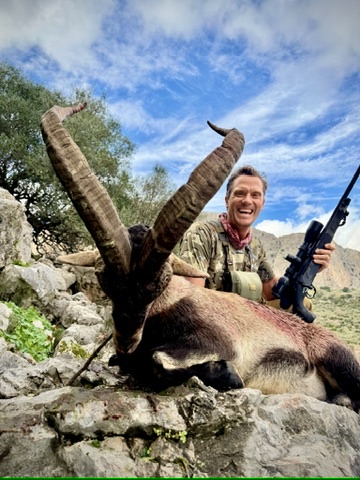
The Gredos Spanish Ibex is distinguished by its heavy, outward-sweeping lyre-shaped horns, which differ in mass, flare, and growth pattern from other Spanish ibex subspecies.These horns are known for substantial base thickness and length relative to body size, reflecting long-term adaptation to the steep, high-elevation terrain of the Sierra de Gredos. The subspecies also exhibits a robust frame and darker seasonal coat, traits well suited to cold exposure, wind, and alpine conditions. This combination of horn structure, body build, and habitat defines the Gredos Ibex as a technically demanding, conservation-managed mountain hunt rather than a high-volume or opportunistic pursuit.
Takeaway: The Gredos Ibex is defined by heavy lyre-shaped horns, a mountain-adapted build, and a high-elevation habitat—factors that require accurate identification, disciplined shot selection, and ethical execution.
FAQ 2: Where exactly is the Gredos mountain range located in Spain?
The Gredos mountain range is a central section of Spain’s Sistema Central, extending primarily through the provinces of Ávila, Salamanca, Cáceres, and Toledo in central Spain.Its rugged granite peaks, glacial valleys, and high-elevation basins form a naturally isolated mountain system that supports stable, conservation-managed Gredos Ibex populations. Rather than a scenic backdrop, the range functions as a demanding alpine environment defined by exposure, elevation, and limited access. Access is typically staged through established mountain towns and controlled entry points that support regulated hunting and habitat protection.
Takeaway: The Gredos range lies in central Spain within the Sistema Central, where granite peaks, elevation, and isolation define both ibex habitat and the technical demands of the hunt.
FAQ 3: What are the typical physical characteristics of a mature Gredos ibex?
A mature male Gredos Ibex is the largest and most heavily built of Spain’s ibex subspecies, standing approximately 75–100 cm (2.5–3.3 ft) at the shoulder and weighing 85–120 kg (188–265 lbs), with older males often reaching the upper end of that range.Their most defining feature is a set of large, heavy, deeply ringed horns, typically lyre-shaped—rising vertically before flaring outward and sweeping back, with inward-curving tips. Horn length can approach one meter, and distinct annual growth rings are used to support accurate age assessment.
Coat characteristics shift seasonally. While summer coats are shorter and lighter, mature males darken significantly during winter and the rut, developing near-black coloration across the chest, forelegs, and dorsal line, often accompanied by a long, dark beard. Females are considerably smaller—averaging around 40 kg (88 lbs) and approximately 65 cm (2.1 ft) at the shoulder—with short, slender horns rarely exceeding 20–25 cm and a lighter, uniform brown coat without the male’s pronounced dark markings.
Takeaway: The Gredos Ibex is identified by its exceptional body mass, heavily ringed lyre-shaped horns, and pronounced seasonal darkening—traits shaped by high-elevation alpine conditions that require precise identification and disciplined, ethical execution in the field.
FAQ 4: What is the Gredos ibex’s natural habitat and behavior?
The Gredos ibex occupies high-elevation, exposed mountain terrain within the Sierra de Gredos, favoring steep slopes, cliff bands, ridgelines, and alpine basins rather than open meadow systems.The subspecies is exceptionally agile and sure-footed, an adaptation that allows confident movement across broken granite and significant elevation changes. Gredos ibex are primarily diurnal, with activity patterns influenced by temperature, wind, and seasonal pressure, and are commonly observed in small, structured groups, while mature males may remain solitary or form bachelor groups outside the rut. Their diet consists of native grasses, shrubs, and high-alpine vegetation available in these sparse, resource-limited environments.
Takeaway: Understanding the Gredos ibex’s preference for exposed, high-elevation terrain, daylight movement patterns, and terrain-driven behavior is essential for ethical planning, disciplined stalking, and responsible shot selection.
SECTION 2: Planning Your Gredos Ibex Hunt
FAQ 5: What is the best time of year for hunting Gredos Spanish Ibex?
The prime season for hunting Gredos Spanish Ibex generally runs from late October through early May, offering distinct operational considerations depending on weather, elevation, and ibex movement patterns.The rut, occurring from late October through December, drives increased daytime movement and visibility of mature males, though winter conditions at elevation can be severe. Later in the season, from January through May, ibex often shift elevation in response to weather and forage availability, allowing for more predictable glassing and controlled stalk execution despite colder temperatures. Season selection should be driven by terrain conditions, weather tolerance, and execution priorities rather than convenience.
Takeaway: Select the Gredos Ibex season based on rut-driven movement in late fall or terrain-adjusted accessibility later in the season, aligning timing with weather tolerance, elevation conditions, and disciplined execution goals.
FAQ 6: How physically demanding is a Gredos ibex hunt?
A Gredos ibex hunt is physically and technically demanding, requiring solid functional fitness, strong lower-body stability, and mental discipline to operate safely in steep, rocky, high-elevation alpine environments.Hunters should expect sustained spot-and-stalk movement with meaningful elevation gain and loss across uneven granite slopes rather than constant high-speed travel. Altitude, exposure, and rapidly shifting mountain weather add complexity, making measured preparation and terrain readiness essential. This is a purpose-driven alpine mountain hunt defined by terrain management and sustained endurance over multiple days.
Takeaway: Prepare for a Gredos ibex hunt with terrain-specific conditioning focused on stability, endurance, and altitude tolerance, rather than generic fitness alone.
FAQ 7: What kind of rifle and optics should I bring for a Gredos ibex hunt?
For hunting Gredos Spanish Ibex, a flat-shooting bolt-action rifle chambered in established mountain calibers such as .270 Winchester, 7mm Remington Magnum, .30-06 Springfield, or .300 Winchester Magnum is well suited for ethical shot placement across variable alpine distances.These calibers provide the ballistic consistency and penetration needed for angled shots and wind-affected terrain. Pair the rifle with field-proven optics, including a variable-power scope (commonly in the 3–12x or 4–16x range) and binoculars (10×42 or 12×50) for extended glassing in open mountain basins. A laser rangefinder is essential to support precise distance confirmation in broken terrain. Rifle balance, reliability, and shooter familiarity remain more critical than chasing maximum magnification or caliber size.
Takeaway: Select a proven, reliable bolt-action rifle paired with durable, mountain-appropriate optics and a rangefinder to support disciplined, ethical shot placement in the high-elevation terrain of a Gredos ibex hunt.
FAQ 8: Why are local guides crucial for hunting Gredos Spanish Ibex?
Local guides are operationally critical for hunting Gredos Spanish Ibex due to their deep, region-specific understanding of terrain, ibex behavior, and regulatory requirements.Their experience supports safe movement, disciplined stalk execution, and accurate animal assessment in steep, high-elevation environments. These guides work daily within the Gredos range, controlling access, interpreting rapidly changing mountain conditions, and directing ethical shot decisions within licensed concessions. Their role is foundational to safety, legality, and conservation-aligned outcomes, rather than a supplementary advantage.
Takeaway: Professional local guides are essential for terrain control, animal selection, regulatory compliance, and disciplined, ethical execution during a Gredos ibex hunt.
SECTION 3: Ethical Hunting & Conservation
FAQ 9: How does GHS ensure ethical hunting practices for Gredos ibex?
Global Hunting Solutions ensures ethical hunting practices for Gredos ibex through strict compliance with Spain’s regulated hunting framework, science-based quota systems, and licensed concession management, working exclusively with experienced, region-vetted local professionals.Ethical execution is centered on fair-chase principles, disciplined animal selection, and harvest of approved, mature ibex to support long-term population stability within the Gredos range. Shot discipline, terrain management, and guide-directed decision-making are emphasized to minimize risk and ensure humane outcomes. Conservation is integrated into every phase of the hunt as an operational requirement, not a marketing claim.
Takeaway: GHS Gredos ibex hunts operate within regulated harvest systems, fair-chase standards, and conservation-driven management to support ethical outcomes and long-term population health.
FAQ 10: What role does conservation play in Gredos Spanish Ibex hunting?
Conservation plays a foundational role in Gredos Spanish Ibex hunting, as regulated hunting operates within strict, quota-based management frameworks designed to sustain habitat quality, population balance, and long-term viability.Harvest limits are established through regional wildlife authorities, population monitoring, and concession-level management, ensuring controlled take and protection of herd structure and genetics. Licensed hunting activity contributes directly to funding and enforcement capacity that supports habitat maintenance and monitoring within the Gredos range, while aligning hunter participation with conservation outcomes rather than short-term harvest objectives. This framework positions hunters as participants in a regulated conservation system, not drivers of pressure on the resource.
Takeaway: Conservation in Gredos Ibex hunting is embedded through regulated quotas, monitored concessions, and reinvestment into habitat and oversight, ensuring population stability and long-term stewardship of the mountain ecosystem.
FAQ 11: How do hunting fees contribute to Gredos ibex management?
How do hunting fees contribute to Gredos ibex management?These funds support population monitoring, habitat management, disease oversight, and enforcement activities, including the work of licensed game wardens responsible for maintaining compliance within the Gredos range. Rather than serving as a general funding pool, fees are reinvested directly into the same mountain systems where hunting occurs, reinforcing population balance and habitat integrity. This structure aligns hunter participation with conservation outcomes through a controlled, self-sustaining management model.
Takeaway: Hunting fees for Gredos ibex support regulated population management, habitat stewardship, and enforcement within the Gredos range, reinforcing long-term conservation through a controlled, quota-driven system.
SECTION 4: Logistics & Experience
FAQ 12: What type of accommodation can I expect during a Gredos ibex hunt?
During a Gredos ibex hunt, accommodations are purpose-selected for proximity, recovery, and field efficiency, typically well-appointed mountain lodges or rural hotels positioned close to licensed hunting concessions.These lodgings are chosen to support rest, consistency, and readiness after demanding days in steep high-elevation mountain terrain, rather than for sightseeing or resort-style amenities. Global Hunting Solutions ensures comfortable, private accommodations and quality regional, locally sourced meals that align with the pace and physical demands of the hunt. The focus is functional comfort and reliability, balancing rugged mountain conditions with measured, understated hospitality.
Takeaway: Expect purpose-driven mountain accommodations that prioritize rest, recovery, and operational efficiency while maintaining comfort and regional character appropriate for a serious Gredos ibex hunt.
FAQ 13: How does GHS handle permits and licenses for international hunters?
Global Hunting Solutions handles and coordinates all required permits and licenses for international hunters as part of a disciplined, pre-trip compliance process. This includes Spanish hunting licenses, subspecies-specific authorizations for Gredos Ibex, and—when applicable—firearm import permits or approved in-country rifle rental arrangements.GHS manages documentation, timelines, and regulatory submissions well in advance, working within Spain’s regulated hunting framework to ensure legal readiness before arrival. Hunters are guided through required documentation and approvals so field execution proceeds without administrative interruption.
Takeaway: GHS handles licensing, firearm documentation, and regulatory coordination in advance, ensuring international hunters arrive fully compliant and operationally cleared to hunt within Spain’s legal framework.
FAQ 14: What is the typical duration of a Gredos Spanish Ibex hunting trip?
A typical Gredos Spanish Ibex hunting trip usually spans approximately 2 to 3 dedicated hunting days within the broader Spanish itinerary, with additional travel days planned on either end of the itinerary.Within the Global Hunting Solutions Spanish Ibex Grand Slam program, the Gredos Ibex hunt is typically scheduled for Days 2–3 following arrival in Madrid, allowing adequate time for acclimation to elevation, terrain assessment, and disciplined spot-and-stalk execution in steep alpine conditions. While some hunts may conclude sooner, allowing additional time reduces pressure, improves decision-making, and supports ethical animal selection within regulated concessions. Itineraries are structured around terrain, season, and execution requirements rather than a fixed schedule.
Takeaway: Plan for 2–3 focused hunting days for the Gredos Ibex, commonly conducted on Days 2–3 of the GHS Spanish itinerary, plus travel, allowing sufficient time for acclimation, terrain-driven strategy, and disciplined execution within a regulated mountain system.
FAQ 15: What steps are involved in trophy preparation and export after the hunt?
After a successful Gredos ibex hunt, Global Hunting Solutions directly manages and oversees the full trophy preparation process, beginning with field-appropriate skinning, caping, and initial preservation conducted under local regulatory oversight.GHS handles all trophy preparation, documentation, and international shipping logistics through licensed partners, including CITES permits, veterinary certification, and export approvals, to ensure compliance with Spanish and destination-country requirements. Timelines are governed by regulatory review and approved processing stages, and completion may take several months. This structured process ensures lawful handling, traceability, and conservation compliance from field to final delivery.
Takeaway: GHS fully manages trophy preparation, export documentation, and international shipping logistics through regulated, licensed channels—ensuring compliant handling, conservation alignment, and secure delivery of your Gredos ibex trophy.