
Quick Summary / Key Takeaways
If you only remember 5 things from this guide, make it these:
- Prioritize licensed South Africa outfitters operating on well-managed private concessions with documented ethical standards, conservation oversight, and long-term wildlife stewardship.
- Select experienced Professional Hunters (PHs) with deep, region-specific knowledge of terrain, plains-game behavior, and disciplined fair-chase execution.
- Confirm structured safety protocols, firearms handling support, and end-to-end logistical coordination, from airport arrival to field operations, before committing.
- Evaluate outfitters on transparent pricing models, clearly defined species availability, quota management, and responsible engagement with local landowners and communities.
- A top-tier outfitter delivers personalized planning, professional on-the-ground leadership, and a controlled, immersive safari experience rooted in credibility rather than spectacle.
Introduction

Choosing the right South Africa hunting outfitter is a strategic decision that determines the ethical standard, operational discipline, and overall integrity of your safari. For serious hunters, success is measured not only by the animal taken but by fair-chase execution, conservation-led wildlife management, and experienced professional leadership in the field. South Africa offers a wide spectrum of hunting environments, from well-managed plains-game concessions to strictly regulated dangerous-game areas, and the outfitter you select directly influences safety oversight, quota compliance, logistical sequencing, and field conduct. This guide cuts through promotional language to focus on the factors that genuinely separate credible, conservation-driven operators from volume-based outfits. By emphasizing licensing integrity, Professional Hunter expertise, quota stewardship, and operational transparency, it equips you to select an outfitter aligned with your values, expectations, and long-term view of ethical hunting. The objective is clear: choose a South Africa outfitter capable of delivering a controlled, authentic, and conservation-aligned safari experience in 2026 and beyond.
Key Differentiators of Credible South Africa Hunting Outfitters
| Feature | Top-Tier Outfitter | Average Outfitter | Impact on Hunt |
|---|---|---|---|
| Licensing & Ethical Standards | Fully licensed, CITES-compliant, strictly enforced fair-chase standards | Inconsistent licensing, partial compliance | Legal exposure, ethical risk, potential hunt interruption |
| Professional Hunter (PH) Experience | Senior PHs with decades of region-specific plains game and dangerous game experience | Limited tenure, broad but shallow experience | Reduced safety margins, lower execution precision |
| Conservation & Quota Stewardship | Active conservation partnerships, disciplined quota and age-class management | Transactional harvesting, limited stewardship | Unsustainable pressure, degraded long-term trophy quality |
| Safety Protocols & Field Control | Proactive risk management, formal emergency planning, trained field teams | Reactive procedures, informal oversight | Elevated incident risk, operational instability |
Practical Considerations for Your South Africa Hunt
| Aspect | Plains Game Hunt | Dangerous Game Hunt | Outfitter’s Role |
|---|---|---|---|
| Species Focus | Kudu, impala, blue wildebeest, zebra, springbok, blesbok, gemsbok, and other plains game species | Cape buffalo and select dangerous game, subject to pre-booking and permit approval | Align species selection with permits, quotas, and hunter objectives |
| Terrain & Habitat | Open savannah, bushveld, and expansive plains across managed private concessions | Dense bush, riverine systems, and remote dangerous-game concessions | Manage access, tracking strategy, and disciplined shot execution |
| Logistics | Efficient access, luxury lodges, coordinated ground transfers | Remote access, specialized vehicles, reinforced camps, expanded safety infrastructure | Coordinate permits, firearms, vehicles, and equipment |
| Hunt Duration | 7–10 days typical, with 14-day options for extended plains game itineraries | 14–21 days common for dangerous game pursuits | Design pacing, recovery time, and execution windows aligned to conditions |
Pre-Safari Due Diligence & Hunt Readiness Checklist
- Confirm the outfitter’s current South African licensing, concession access, and species-specific permits aligned precisely to your GHS safari itinerary.
- Speak directly with your assigned Professional Hunter (PH) to assess region-specific experience, safety leadership, and adherence to fair-chase standards.
- Review documented safety protocols, medical contingencies, and emergency response procedures applicable to plains game and any pre-booked dangerous game components.
- Verify end-to-end logistical sequencing, including meet-and-assist arrival support, in-country transfers, lodge accommodations, daily hunt structure, and clearly defined trophy handling responsibilities.
Post-Safari Review & Trophy Management Checklist
- Finalize all trophy documentation, field preparation approvals, and export coordination through certified taxidermy and shipping partners.
- Conduct a structured post-hunt debrief with your GHS outfitter to evaluate field execution, conditions, and refinement opportunities for future safaris.
- Document lessons learned related to species selection, seasonal timing, equipment performance, and hunt pacing to guide future African or international hunts.
- Share measured, professional feedback with trusted advisors or hunting peers where appropriate, emphasizing execution quality, ethical standards, and operational credibility.
Table of Contents
SECTION 1: UNDERSTANDING TOP-TIER OUTFITTERS
- What defines a truly ethical South Africa hunting outfitter?
- How do licensed operations benefit the hunter and conservation?
- What role does an experienced Professional Hunter play in a successful safari?
SECTION 2: PLANNING YOUR HUNT
- What species can I hunt with South Africa hunting outfitters?
- How do terrain and habitat influence the hunting experience?
- What logistical support should I expect from a reputable outfitter?
- How far in advance should I book my South Africa hunting safari?
SECTION 3: ETHICS, SAFETY, AND CONSERVATION
- What are fair-chase principles in South African hunting?
- How do outfitters contribute to wildlife management and local communities?
- What safety protocols should a hunter expect from their outfitter?
- How important is a conservation partnership for hunting outfitters in South Africa?
SECTION 4: COST, VALUE, AND EXPECTATIONS
- What factors influence the cost of a South Africa hunting safari?
- How can I ensure transparent pricing from hunting outfitters in South Africa?
- What level of personalized service should I expect?
- What happens after the hunt regarding trophy handling and logistics?
Frequently Asked Questions
SECTION: UNDERSTANDING TOP-TIER OUTFITTERS
What defines a truly ethical South African hunting outfitter?
A truly ethical South African hunting outfitter is defined by consistently enforced fair-chase discipline, verifiable conservation impact, and professional standards that extend beyond minimum legal compliance. Fair chase is non-negotiable: animals must be wild, free-ranging, and hunted in properly scaled ecosystems large enough to allow natural behavior and genuine escape, with no shooting from vehicles, artificial lighting, or confined enclosures. Ethical operators categorically reject any form of canned or artificially constrained hunting that removes the animal’s agency and instead operate within well-managed, conservation-driven concessions or conservancies.
Respect for wildlife is demonstrated through disciplined shot selection, immediate follow-up on wounded animals, and selective harvesting focused on mature, non-breeding males to protect herd structure and long-term viability. Ethical outfitters also ensure responsible utilization of harvested game, reinforcing hunting’s role as a legitimate wildlife management tool rather than a consumptive shortcut. Operational credibility is anchored in proper outfitter and Professional Hunter (PH) licensing, transparent pricing, experienced field leadership, and verifiable client references, all applied in practice, not marketing.
Beyond the hunt itself, ethical outfitters contribute directly to habitat preservation, anti-poaching initiatives, and community employment, sustaining wildlife on private land that might otherwise be lost to development. Participation in quota-driven, survey-based wildlife management programs ensures hunting pressure remains biologically defensible and conservation-led, not demand-driven.
Takeaway: Choose outfitters that actively enforce true fair-chase standards, prioritize humane and selective harvest, operate with documented professional transparency, and invest meaningfully in conservation and local communities—the hallmarks of an ethical South Africa hunt.
Back to Table of Contents
How do licensed operations benefit the hunter and conservation?
Licensed operations provide verifiable legal protection for the hunter and direct, structured funding for conservation systems that sustain wildlife long term. These outfitters operate within formally regulated frameworks, ensuring permits, quotas, species eligibility, and season parameters are applied correctly—protecting hunters from legal exposure and operational shutdowns. Licensing also anchors hunts within science-based wildlife management models, where harvest limits are tied to population data rather than demand.
The fees, levies, and taxes generated by licensed hunts flow back into wildlife agencies, habitat management, and anti-poaching enforcement, particularly on private land that would otherwise be vulnerable to agricultural or commercial conversion. This model preserves functional ecosystems, funds professional oversight, and reinforces hunting as a legitimate conservation tool rather than an extractive activity. For the hunter, licensing translates into predictability, ethical assurance, and participation in a system designed to endure beyond a single season.
Takeaway: Select properly licensed outfitters to ensure legal protection in the field and to ensure your hunt contributes directly and measurably to long-term conservation and wildlife management.
Back to Table of Contents
What role does an experienced professional hunter play in a successful safari?
An experienced professional hunter is the operational backbone of a properly executed safari, translating planning into disciplined, ethical performance in the field. Beyond guiding the hunt, a seasoned PH assumes full responsibility for safety, legal compliance, and decision-making in environments where conditions shift quickly, and consequences are real. They manage firearm discipline, terrain risk, and emergency readiness, particularly during dangerous game encounters where rapid judgment and backup capability are non-negotiable.
Field execution is where experience shows. A PH applies deep, region-specific knowledge of animal behavior, wind, terrain, and pressure to locate game, structure stalks, and position the hunter for clean, humane shots. Their ability to assess age, maturity, and suitability in seconds ensures harvest decisions align with conservation objectives rather than impulse. This selectivity protects herd structure and reinforces hunting’s role as a management tool.
Equally critical is oversight beyond the trigger pull. Professional hunters enforce fair-chase standards, ensure adherence to permits and quotas, and maintain operational control of logistics—from daily hunt planning to trophy care and field preparation. They also serve as educators and mentors, adjusting pace and approach to the hunter’s ability while providing context on wildlife, land stewardship, and local conservation realities.
In practice, a skilled PH closes the gap between expectation and execution. Their leadership safeguards lives, protects wildlife, and delivers a hunt defined by control, ethics, and professionalism rather than chance.
Takeaway: Rely on an experienced professional hunter to enforce safety, fair-chase ethics, legal compliance, and conservation-aligned decision making in the field, ensuring every aspect of the safari is executed with discipline, control, and professional accountability.
SECTION: PLANNING YOUR HUNT
What species can I hunt with South Africa hunting outfitters?
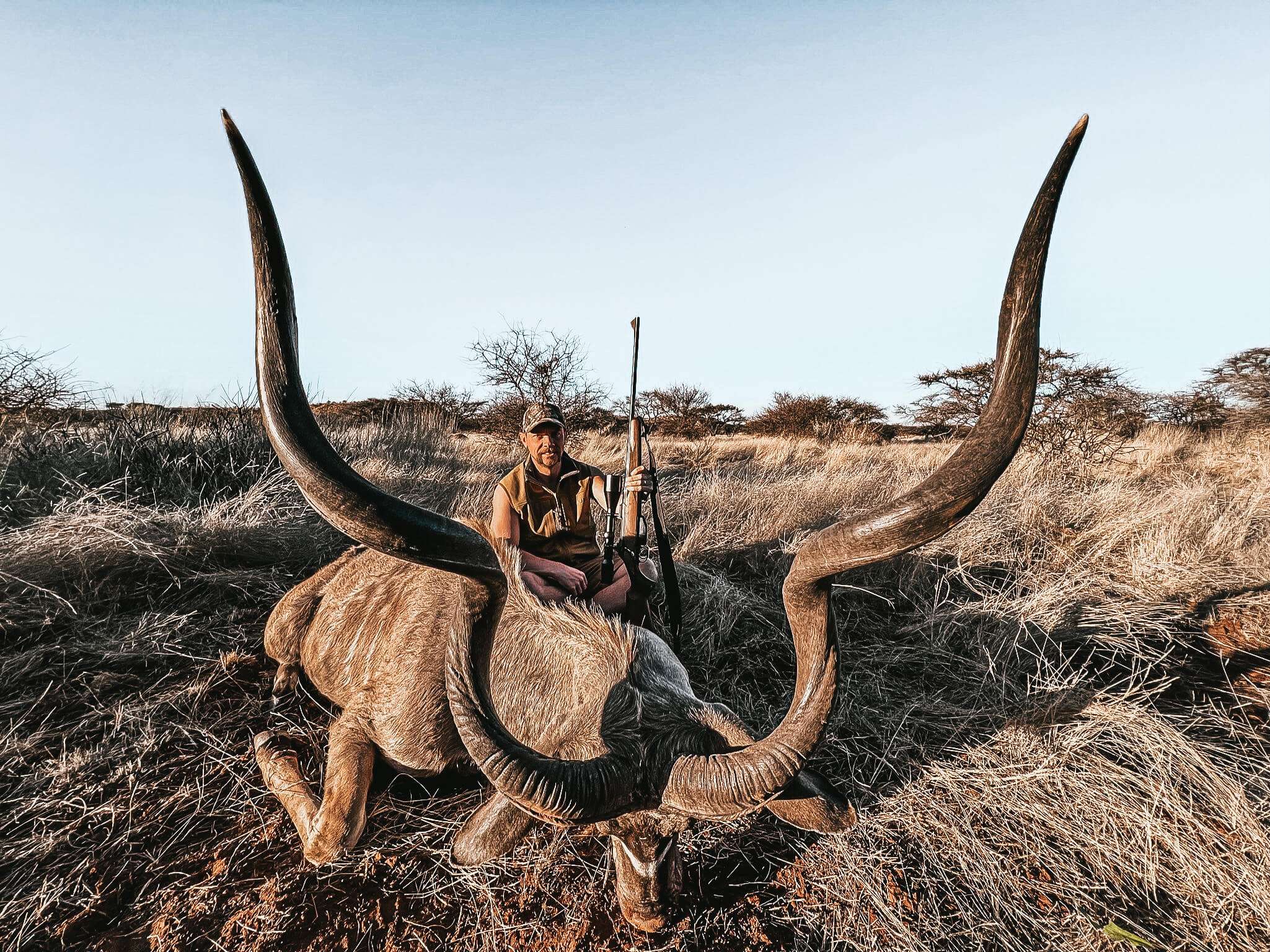
South Africa hunting outfitters provide access to a disciplined, quota-managed range of species, structured around plains game and strictly regulated dangerous game under South African conservation law. Plains game opportunities prioritize selective, conservation-aligned harvests alongside higher-volume options, commonly including kudu, impala, blue and black wildebeest, zebra, gemsbok, warthog, eland, sable, blesbok, red hartebeest, and other managed antelope species. Depending on concession scale, habitat type, and regional ecology, hunts may also include nyala, bushbuck, waterbuck, roan, tsessebe, springbok variants, duiker, steenbok, and specialized plains game pursued under defined management objectives.
Dangerous game availability is tightly controlled and permit-driven, with select outfitters authorized to pursue Cape buffalo and additional Big Five species under conservation-approved programs. Elephant, lion, leopard, rhinoceros, hippopotamus, and crocodile hunts are governed by national oversight, CITES regulation, and concession-specific authorization, requiring advanced planning, quota confirmation, and senior Professional Hunter leadership. Species access varies by region—with areas such as Limpopo, Kimberley-adjacent concessions, and select Eastern Cape properties offering distinct species mixes, terrain profiles, and execution styles—and may support rifle, bow, or discipline-specific hunting methods depending on conditions and regulation.
Takeaway: Confirm species availability, regional access, quota allocation, and regulatory requirements early with your outfitter to ensure your South Africa hunt aligns with ethical standards, legal frameworks, and clearly defined objectives.
Back to Table of Contents
How do terrain and habitat influence the hunting experience?
Terrain and habitat shape every decision in the field, influencing where animals hold, how they move, and which tactics can be executed safely and ethically. The game does not use the landscape randomly. Topography creates predictable movement patterns, with animals favoring terrain features that offer security and efficiency—low saddles between ridges, contour lines that minimize energy expenditure, and broken ground that limits visibility. In rolling or mountainous country, wind and thermals become decisive factors, requiring precise positioning to avoid scent exposure as air rises in the morning and drops in the evening. Steeper, more rugged terrain also raises the physical and logistical demands of the hunt, affecting access, pacing, and recovery planning.
Habitat composition adds another layer of control. Vegetation density dictates visibility and engagement distance, with thick brush and forested cover favoring close-range encounters and deliberate ambush setups, while open ground supports glassing-intensive, spot-and-stalk execution. Animals consistently concentrate along habitat transitions, where food, water, and cover intersect, and their daily patterns shift as seasonal changes alter forage quality and water availability. Roads, trails, and human access points further influence pressure and movement, often pushing mature animals into less accessible terrain.
For the hunter, understanding these variables determines not just success, but safety and ethical discipline. Terrain hazards, weather exposure, and environmental conditions must be factored into shot selection, equipment choice, and daily planning. A competent outfitter and professional hunter accounts for these realities when designing stalks, choosing hunting areas, and adjusting tactics to maintain control rather than reacting to the landscape.
Takeaway: A clear understanding of terrain and habitat dynamics allows hunters to anticipate animal movement, select appropriate equipment, and apply ethical, effective strategies that align with real field conditions rather than assumptions.
Back to Table of Contents
What logistical support should I expect from a reputable outfitter?
A reputable outfitter provides disciplined, end-to-end logistical control, removing operational friction so the hunter can focus on ethical, deliberate field execution. This begins well before travel, with structured pre-trip planning that covers permits, licenses, regulatory requirements, equipment guidance, travel sequencing, and safety expectations. Clear documentation, defined timelines, and proactive communication ensure hunters arrive prepared, compliant, and aligned with the realities of the terrain and species pursued.
On the ground, logistical support includes coordinated airport meet-and-assist services, reliable in-country transportation to concessions and camps, and professionally managed lodging and meal service scaled to the hunt’s duration and intensity. Reputable outfitters maintain properly equipped camps or lodges, experienced support staff, and dependable vehicles suited for remote access. Where required, they provide regulated firearm rental or import assistance, optics, blinds, or other specialized equipment matched to local conditions.
Operational oversight continues throughout the hunt. Outfitters manage daily movement planning, safety protocols, emergency preparedness, and staff coordination, ensuring the hunt runs with control and predictability even when conditions shift. After harvest, they supervise field preparation, documentation, and transfer to certified processors or taxidermy partners, maintaining clear chain-of-custody integrity through export or shipment. Post-hunt support typically includes continued communication, shipping coordination, and documentation follow-through, closing the loop with professional accountability.
Takeaway: Expect structured pre-trip planning, coordinated transport, professionally run camps, equipment support, safety oversight, and compliant trophy handling—logistical control that protects the hunt’s integrity and allows full focus on ethical, disciplined execution in the field.
Back to Table of Contents
How far in advance should I book my South African hunting safari?
For a South Africa hunting safari, booking 12 to 24 months in advance provides the greatest control over seasonal timing, concession access, Professional Hunter availability, and overall execution quality. While 6–12 months may be workable during lower-demand periods or with greater flexibility on location and lodge tier, earlier planning is essential to secure prime dry-season windows, top-tier concessions and lodges, and senior PH leadership, particularly during the May–September peak season when tracking efficiency and animal movement are at their strongest. Hunts involving limited-quota species, dangerous game, specific PH requests, or larger hunting parties often require 18–24 months of lead time to align permits, quotas, logistics, and field support without compromise. Early booking also creates sufficient runway for firearm permits, international travel coordination, physical conditioning, and marksmanship preparation, ensuring execution remains deliberate, controlled, and professionally managed rather than compressed.
Takeaway: Plan to book your South Africa hunting safari 12–24 months in advance to secure peak-season access, experienced Professional Hunters, well-managed concessions, and fully coordinated permits within ethical, quota-driven frameworks.
SECTION: ETHICS, SAFETY, AND CONSERVATION
What are fair-chase principles in South African hunting?
Fair-chase principles in South African hunting define ethical pursuit as engaging truly free-ranging, wild animals under conditions that preserve their natural ability to detect, evade, and escape. The standard rejects any method that shifts the balance through artificial or technological advantage, placing emphasis on the hunter’s judgment, patience, fieldcraft, and restraint rather than control or certainty. Walking and stalking in natural habitats remains central, ensuring the outcome is earned through skill and decision-making, not convenience.
Respect for wildlife sits at the core of fair chase, shaping both target selection and conduct in the field. Ethical execution prioritizes mature animals, disciplined shot selection, and avoidance of practices that compromise animal agency, including shooting from vehicles, night hunting with artificial light, drones, or any pursuit within confined settings. Strict adherence to South African law and regulation is non-negotiable, with licensed Professional Hunters enforcing standards in real time to ensure legality, safety, and conservation alignment throughout the hunt.
Takeaway: Fair chase in South Africa means pursuing free-ranging game without artificial advantage, under professional oversight, legal compliance, and disciplined field execution—where respect for wildlife and earned outcomes define the hunt.
Back to Table of Contents
How do outfitters contribute to wildlife management and local communities in South Africa?
Reputable South African hunting outfitters contribute to wildlife management by creating a direct economic incentive to preserve wildlife and habitat through regulated, science-based hunting rather than land conversion or uncontrolled use. Revenue generated through licensed hunts supports population monitoring, quota enforcement, habitat protection, veterinary intervention, and anti-poaching operations, anchoring conservation outcomes in measurable management systems. In regions with limited natural predation, disciplined off-take under government-assigned quotas helps maintain ecological balance and reduce habitat degradation and human–wildlife conflict, reinforcing hunting’s role as an active management tool rather than extraction.
At the community level, ethical outfitters drive rural employment, skills development, and localized economic circulation by employing professional hunters, trackers, skinners, lodge staff, drivers, and conservation personnel, while sourcing food, fuel, and services locally. Hunting revenue often contributes to community trusts and shared-benefit programs that support infrastructure such as schools, clinics, water systems, and road maintenance, alongside game meat distribution that strengthens food security in surrounding villages. By tying wildlife value directly to livelihoods and shared stewardship, outfitters help reduce poaching pressure and build long-term community alignment with conservation objectives.
Takeaway: Support outfitters who use quota-driven wildlife management and local economic participation to protect habitat, fund conservation, and strengthen rural communities, ensuring ethical hunting delivers measurable benefits beyond the field.
Back to Table of Contents
What safety protocols should a hunter expect from their outfitter?
A reputable hunting outfitter must treat safety as a non-negotiable operational standard, enforced consistently before, during, and after time in the field. Hunters should expect a structured safety orientation on arrival that covers camp rules, applicable local regulations, emergency contacts, and clear command authority. Firearm handling is reviewed explicitly, with verification of weapon condition, reinforcement of safe carry practices, and defined zones of fire to prevent crossfire risk.
In the field, safety is maintained through constant supervision by an experienced licensed professional hunter, strict control of weapon loading and unloading, mandatory target identification, and clear movement protocols when traveling by vehicle, on foot, or near other hunters. High-visibility requirements, disciplined positioning, and routine real-time check-ins are enforced to reduce human-caused risk in varied terrain and cover.
Equipment and environmental safety are addressed through inspection of vehicles and gear, weather monitoring, hydration and exposure planning, and access to reliable communication systems such as radios or satellite devices. Outfitters must operate with a defined emergency action plan, including first-aid capability, trauma response procedures, and evacuation contingencies appropriate to remote concessions and wilderness settings. A zero-tolerance approach to alcohol or substance use before or during hunting hours is strictly standard practice.
Takeaway: Expect enforced safety briefings, disciplined firearm and movement control, maintained equipment, emergency preparedness, and zero-tolerance risk policies from any outfitter operating at a serious, conservation-aligned ethical standard.
Back to Table of Contents
How important is a conservation partnership for hunting outfitters in South Africa?
Conservation partnerships are foundational for credible hunting outfitters in South Africa, grounding operations in science-based management rather than short-term extraction. Active collaboration with provincial and national wildlife authorities, research bodies, and conservation organizations provides the data required to set ecologically defensible quotas, monitor population health, and manage habitat across large concessions. These partnerships ensure hunting activity is aligned with seasonal cycles, species-specific pressures, and long-term sustainability rather than market-driven demand.
Equally important, formalized conservation partnerships create clear accountability for how hunting revenue is deployed. Funds are channeled into anti-poaching operations, habitat restoration, wildlife monitoring, and locally anchored conservation programs that protect land and species beyond the hunt itself. An outfitter engaged at this level demonstrates measurable operational stewardship—treating hunting as a regulated wildlife management tool and accepting responsibility for outcomes that extend well beyond the client’s time in the field.
Takeaway: Choose outfitters with active, independently verifiable conservation partnerships, as they signal disciplined wildlife management, long-term land stewardship, and ethical execution rooted in sustainability rather than volume.
SECTION: COST, VALUE, AND EXPECTATIONS
What factors influence the cost of a South Africa hunting safari?
Several factors determine the total cost of a South African hunting safari, with species selection and rarity serving as the primary drivers. Common plains game typically carry more accessible trophy fees, while limited-quota species and regulated dangerous game command substantially higher costs due to restricted allocations, permit oversight, and increased operational complexity. Overall pricing is further shaped by hunt duration, daily rates covering Professional Hunter leadership and full field support, and the level of accommodation, which can range from purpose-built bush camps to high-end lodges.
Additional cost variables include concession scale and exclusivity, hunting method—with bow hunting or other specialized disciplines often requiring more time and resources than rifle hunting—and post-hunt services such as dip-and-pack, taxidermy, and international shipping. Travel-related expenses, including international flights, firearm import permits, and trophy import documentation, also factor into the final investment. Reputable outfitters clearly define whether pricing follows structured package models for predictability or daily-rate plus trophy-fee structures for fully customized hunts.
Takeaway: South Africa safari costs are driven by species rarity, hunt duration, accommodation standard, concession access, and post-hunt trophy handling—each reflecting the scope, control, and ethical execution of the hunt.
Back to Table of Contents
How can I ensure transparent pricing from hunting outfitters in South Africa?
Ensure transparent pricing from hunting outfitters in South Africa by requiring a detailed, written agreement that defines all financial terms before booking and by establishing clear accountability for how costs are structured, fixed, and reconciled throughout the hunt. A credible outfitter will itemize daily rates, trophy fees by species, and package inclusions, while also clearly disclosing all exclusions such as VAT, road or charter transfers, dip-and-pack services, firearm permit assistance, observer rates, and post-hunt shipping or taxidermy coordination. You should also confirm written policies tied to wounded game, animal substitution, exchange-rate exposure, and discretionary services to eliminate ambiguity. Verifying outfitter and PH licensing, speaking directly with prior clients, and obtaining written estimates from recommended taxidermy and shipping partners further ensure the final cost reflects what was agreed, not what was assumed.
Takeaway: Demand a fully itemized, written contract that defines inclusions, exclusions, variable charges, and enforcement policies upfront so pricing remains controlled, predictable, and aligned with the true operational scope of your safari.
Back to Table of Contents
What level of personalized service should I expect with GHS?
You can expect a deliberately structured, hunter-specific level of personalization delivered by Global Hunting Solutions (GHS), tailored to how GHS designs and executes each itinerary rather than adapting a generic package. Personalization begins before arrival, with direct planning aligned to the specific GHS hunt model—including species objectives, physical capability, terrain demands, and pacing based on the chosen itinerary, whether a South Africa plains game safari or a multi-region international hunt.
In the field, GHS-led hunts are executed under a defined daily structure, with professional hunters and guides adjusting stalk length, terrain selection, and hunt tempo in real time to match the hunter’s experience, endurance, and conditions on the ground. Hunt methods are selected intentionally, such as spot-and-stalk, longer glassing sessions, or tighter bushveld execution, based on concession layout and safety considerations, rather than preference alone. Camp operations, logistics, and support staff are coordinated to maintain consistency, recovery time, and readiness across consecutive hunt days, rather than maximizing volume.
This approach ensures the hunt reflects controlled execution, ethical pacing, and operational discipline rather than customization for its own sake. The result is a GHS safari that feels personal because it is properly engineered, not improvised.
Takeaway: Expect GHS-specific personalization driven by itinerary design, daily execution control, and in-field adaptability, ensuring your hunt is tailored through disciplined planning and professional oversight, not generic customization.
Back to Table of Contents
What happens after the hunt regarding trophy handling and logistics?
After the hunt, Global Hunting Solutions (GHS) manages trophy handling and post-hunt logistics as a fully controlled extension of the field operation, never as an unsupervised handoff to third parties. Field preparation is directly supervised without delay, including skinning, caping, salting, and formalized documentation, to preserve trophy integrity and maintain an unbroken chain of custody from the moment of harvest. Trophies are then transported under centralized GHS coordination to licensed dip-and-pack facilities for veterinary inspection, treatment, and export readiness in strict accordance with South African regulations and applicable CITES requirements.
GHS oversees export documentation, sequencing, and compliance, and coordinates with pre-vetted taxidermy and international shipping partners based on the hunter’s preferences and destination-specific requirements. Throughout the process, communication remains single-channel and centralized, ensuring transparency on status, timelines, and costs until trophies are cleared for shipment. This disciplined, end-to-end approach protects legality, condition, and accountability, closing the hunt with the same execution standards enforced in the field.
Takeaway: Expect GHS-controlled, end-to-end trophy handling—from supervised field preparation through fully compliant export and coordinated shipping—ensuring legal integrity, preservation quality, and a predictable, professionally managed post-hunt process.